

Each year, thousands of religious and spiritual travelers travel to the Mount Kailash region to attend the Saga Dawa Festival.
It celebrates the birth, enlightenment, and final Nirvana of Buddha; hence, to individuals globally who embrace the practice, it is a big spiritual achievement.
In the Saga Dawa month, people go down on their knees to pray, give, and perform rituals that add their merit. The atmosphere in the area of Lake Mansarovar and the Kailash region becomes active, and pilgrims of all kinds appear.
What is the Saga Dawa Festival?
Saga Dawa Festival is one of the most significant festivals of the Tibetian Buddhism. It falls during the fourth month of the Tibetan lunar year, and normally falls in the months of May or June.
The month is regarded as being even more special since it spans the three most significant events in the Buddha’s life: birth, enlightenment, and death. The entire month is therefore seen as full of spiritual energy.
At this stage, worshipers aim to accomplish as many good things as possible. People visit monasteries and light butter lamps, feed the poor, and assist the animals. Many Buddhists do not even eat meat in this month to maintain the element of compassion.
In Tibet, the festivals become even greater in the Mount Kailash region, which is worshipped as one of the most holy mountains of the world. Pilgrims walk a long way to traverse the holy Kailash Kora. Whenever the process of completing that loop, as a part of Saga Dawa, people are said to multiply their merit myriad times.
To a large number of pilgrims, Saga Dawa is not simply a festival, it is more a thought-provoking, deep meditation full of prayer, devotion, and introspection.
Saga Dawa Festival 2026 Date and Lunar Calendar Significance
Saga Dawa Festival falls within the Tibetan lunar cycle, hence the actual date changes with yearly basis. The major celebration will take place on May 31, 2026, on the fourth lunar month full moon day. It is regarded as the holiest day of the entire month.
To the Buddhists, the Saga Dawa full moon has its spiritual significance. They believe that everything- the birth, light, and death of Gautama Buddha, all occurred on the same full moon.
Most individuals think that every good deed performed in Saga Dawa earns way more merit than the regular routine. Things such as assisting others, giving out food, setting lamps with butter or praying are believed to increase during this holy time of the year.
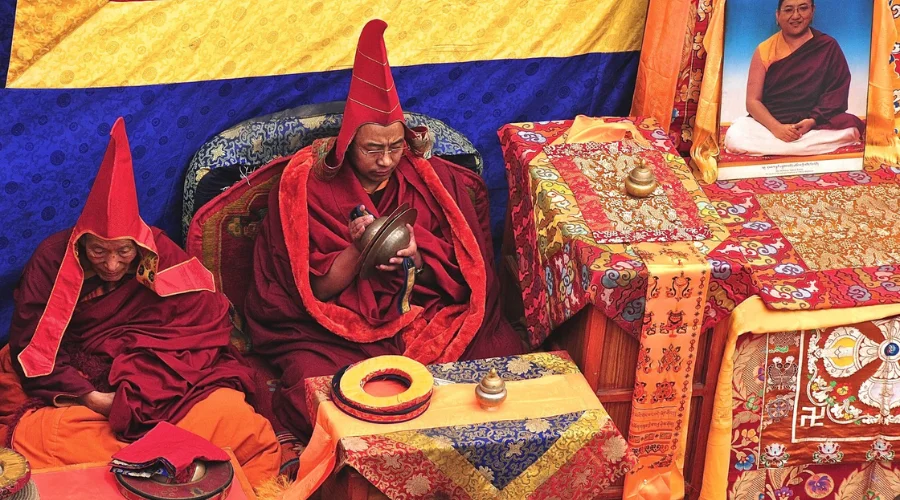
This full moon day is even greater around Mount Kailash. The number of pilgrims around the mountain reach thousands who gather around the mountain to hold rituals and walk around the holy Kora. To many pilgrims, the Saga Dawa is one of the epic moments of their spiritual journey in the Kailash Mansarovar Yatra.
Meaning and Spiritual Significance of Saga Dawa
The Tibetan Buddhists have something to hold on to in the Saga Dawa Festival. Since the name is based on Tibetan calendar in its own way, “Saga” means the fourth month and “Dawa” means to the moon; hence, the name is the holy fourth month of the year.
This month is hugely powerful in spiritual development. It complements the life and teachings of Buddha. According to Buddhists, the three most important moments in the life of Buddha were put on hold during this month of his birth, his enlightenment and his ultimate acceptance into Nirvana.
Owing to this belief, worshipers enhance their consciousness in Saga Dawa. People are concerned with kindness, compassion as well as generosity. A good number of them pass by monasteries, pray, and set butter lamps. Charity service are also most important at the time.
History of Saga Dawa Festival
Saga Dawa Festival can be traced back centuries in the history of Tibetan Buddhism. It began as a means to accomplish the teachings and life of Buddha and has developed to be one of the most significant religious activities in Tibet.
The complete moon of fourth lunar month was already being regarded as holy in early Buddhist traditions. The Tibetan Buddhists went ahead to develop on this by marking this period as the Saga Dawa. This fact was further enhanced by the fact that Buddha was born, enlightened, and died within the same month.
When Buddhism was introduced in Tibet, monasteries and society started to do prayers, rituals, and charity on Saga Dawa. The festival gradually turned out to be a big religious gathering for both monks and the people.
Another important factor that influenced the customs of the festival was the holy land of Mount Kailash. It was during this month that pilgrims began taking journeys to accomplish the Kora. Gradually this ritual made Saga Dawa one of the largest pilgrimage seasons in the region.
The festival continues to attract thousands of pilgrims and seekers today to come and worship faith, compassion, and devotion.
Why is the Month of Saga Dawa the holiest month?
Saga Dawa Festival is regarded as the most sacred month in Tibetan Buddhism. The people who adhere believe that this month is full of spiritual energy. It is the period, when one recollects the three major events in the life of Gautama Buddha birth, enlightenment, and passage to nirvana.
Due to this reason, Buddhists make attempts to be more aware of this month. Individuals are interested in doing good things and practicing their spiritual lives. Small gestures are regarded as extremely significant throughout Saga Dawa. It is believed by many of the devotees that the good Karma one gathers is much larger during this holy period.
In Tibet and in other parts of the Himalayas, monasteries are overwhelmed by rituals and prayers. People attend temples, turn the wheels of the prayer, and recite some sacred mantras. Many also put animals out, give donations, and assist people in need to earn money on spiritual merit as well.
People come in large numbers and complete the holy Kailash Kora to have the spiritual atmosphere of this particular month.
Connection between Saga Dawa and Lord Buddha
The Saga Dawa Festival is actually in relation to the life of Buddha. It is an opportunity to recall the main moments of his story and reflect on his teachings by the Buddhists.
According to the Buddhist tradition three significant events occurred on this full-moon day of the fourth month of the lunar year: his birth in Lumbini, his enlightenment under the Bodhi tree where he discovered the way out of suffering and his parinirvana, the ultimate liberation when he died.
Due to the overlapping of these events, the entire month of Saga Dawa may be considered as super sacred. It is a period when the devotees get closer to the teachings of Buddha, showing compassion, exercising patience and generosity in their everyday living.
How is the Saga Dawa Festival Celebrated in Tibet?
In this period, monasteries are not only a center of spiritual life but also they are a spiritual center. Monks conduct lengthy devotional prayers and read sacred scriptures. Worshipers gather in monastries in the early morning to present butter lamps, incense and prayer flags. Most also rotate prayer wheels and go round monasteries reciting mantras.
Individuals make contributions for food, money and clothing to monks and the poor. There are devotees who free animals such as birds or fish in order to show compassion and honor to life. Many families even fast because of eating meat during this holy month.
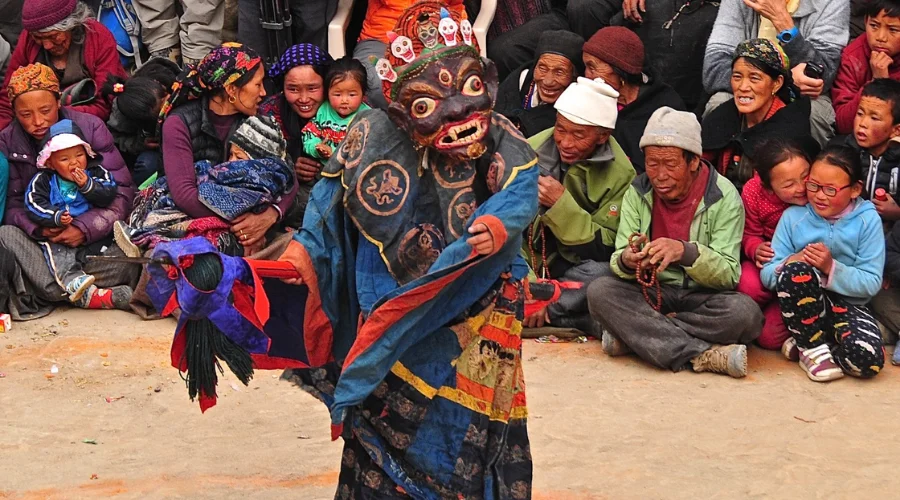
It is one of the largest religious assemblies that is held around Mount Kailash. The pilgrims who belong to various countries visit to complete the holy Kailash Kora.
The entire festival is very serene and spiritual. Prayer flags are flown, monks are chanting and thousands of pilgrims are presenting themselves with faith and devotion. To many, Saga Dawa is not merely a festival but a period in their lives to rejuvenate their spiritual journey and to exercise the teachings of Buddha.
Saga Dawa Festival at Mount Kailash
All Buddhists, Hindus, Jains and the followers of the Bon religion believe that it is a place of divine energy and is full of spiritual energy.
Thousands of pilgrims come to this distant region during the SagaDawa in order to express their devotion. The atmosphere becomes highly colorful and mystic. The mountain is surrounded with monks, local Tibetans, and international pilgrims who come to pray and perform sacred rituals.
Among the major attractions is the Kailash Kora. It is a spiritual process in which pilgrims go around the whole mountain.
This entire cycle is approximately 52kilometers and takes three days. It is estimated by many worshippers that the completion of kora during Saga transforms more spiritual merits and blessings.
The pilgrims also crowd the vicinity around Lake Mansarovar. There is a large number of travelers praying, meditating and taking ritual baths in the sacred lake.
Raising of the Tarboche Prayer Flag Pole During Saga Dawa
The spiritual prayer flag pole is raised in Tarboche which is beside Mount Kailash and this event has been one of the largest in the Saga Dawa celebration. It is a massive spectacle of the festival and attracts thousands of pilgrims annually.
Tarboche is covered with huge pole with flags of Tibetan celebratory color. Every flag has holy mantras and prayers. Whenever the wind appears these prayers are deemed to disseminate peace, compassion and blessedness throughout the world.
On the day of Saga dawa, the full moon, monks and the local devotees begin early in the morning to hoist the high pole once again to begin with the new year.
The ceremony is done through prayers, chanting and traditional rituals. Many pilgrims are waiting fortunately, as the entire moment is believed to bring fortune and spiritual blessings.
Individuals also use new flags to place around the pole as a sacrifice. With the sacred mountain in the background, it is painted in a beautiful and spiritual way due to the colorful flags.
When one comes to Kailash in Soga- dawa, a flag-raising of Tarboche is the highlight of the trip. It marks the beginning of a significant spiritual stage and immerses the entire space with faith, piety and glorification.
Importance of Saga Dawa for Kailash Mansarovar Yatra Pilgrims
Saga Dawa is the best time for Kailash Mansarovar Yatra. To immerse in the spiritual atmosphere of the festival, the holy month welcomes thousands of people who enter to complete the Kailash Kora.
Pilgrims believe that doing the kora at the time of Saga Dawa gives them much more merit than at other times. As per Buddhism, the payoff of good deeds is multiplied upon this holy month hence the fact that walking around the mountain is so powerful.
It is also the time when lots of tourists visit Lake Mansarovar. The lake is very sacred for the Hindu and Buddhist religion. The pilgrims usually take prayers, meditation and ritual bathing in its serene shores.
The entire Kailash region is busy when Saga Dawa takes place. The hills are covered with flags, monks recite religious mantras and pilgrims coming down the world bring their hearts of precious worship.
Religion, Rituals, and Customs in Saga
The month is regarded as a month of cleansing of the mind, and gathering spiritual merit. They all attempt to live kindly, compassionately, and mindfully on the entire stretch.
Visiting monasteries and temples to pay prayers is one of them. Believers light butter lamps and give incense and mantras. Most of them also turn prayer wheels and walk counterclockwise around temples all in the process of praying.
Another important tradition when Saga Dawa is held is Charity. Monks and the needy receive donations of food, clothes or money by their people. It is considered that helping others creates good karma and brings blessings. There are even people who free animals, birds, fish, etc. and it is a kind of mercy to everything that lives.
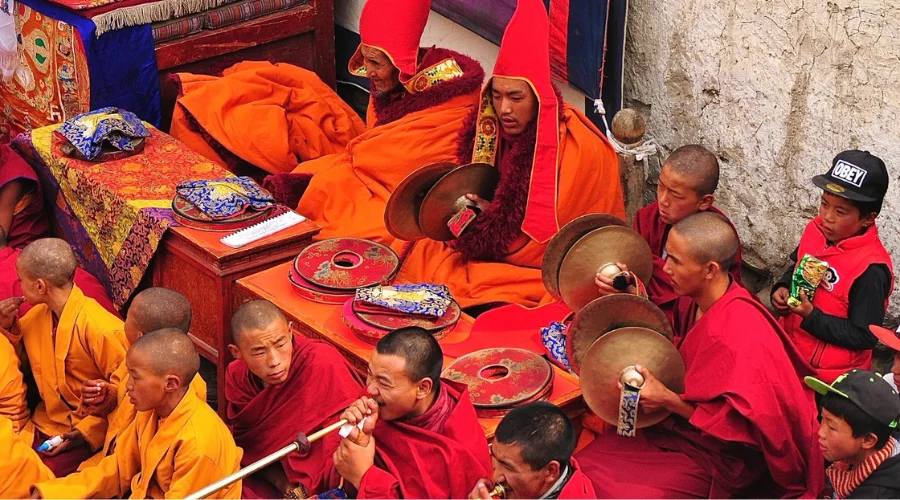
The trek around the mountain is a strong spiritual exercise and most of them chant and meditate as they move through the mountain.
People meet and pray at Lake Mansarovar that is near. Others also perform ritual cleansing in the lake to represent cleansing. Such traditions turn Saga Dawa into a highly significant and religious time of pilgrims and native people.
Benefits of Attending Saga Dawa
It is believed that great spiritual richness comes with attending the Saga Dawa celebration. The month is an opportunity to cleanse the mind which helps to create good karma by doing good things to the Buddhists.
The merit gained during Saga Dawa is larger than that gained at any other time of the year. Having such a belief, individuals pay attention to prayer, charity and compassion. Even the smallest actions such as assisting somebody, feeding of animals, or praying are perceived as very prominent acts in the course of the month.
Those pilgrims who go toMount Kailash in the Saga Dawa get a strong spiritual attachment toward the holy site. It is believed that crossing the Kailash Kora at this time will get rid of sins of the past and calm the heart. Most of them take the trip as a personal growth, meditation and reflection.
Spending some time at Lake Mansarovar is also considered to be spiritually strong. Meditation and prayer are promoted by the serene atmosphere. A lot of pilgrims are sure that it is a blessing to be actually in this holy place during the Saga Dawa to be able to see how clear and have better faith.
Participation in the Saga Dawa is not just a religious event to most of the travelers. It turns into a good spiritual experience that they carry with them throughout their lives.
Travel Tips for Pilgrims Visiting Kailash During Saga Dawa
Are you planning your visit to Saga Dawa Festival with your eyes to Mount Kailash? You can make this trip a valid life alteration, as long as you do it well. The following are some of the tips that have been selected to ensure the journey is safe and super soul-fulfilling.
- Do act, really book your plan of Yatra months in advance. The accommodations and permits are quite scarce, particularly during the Saga Dawa season when a very large number of tourists present themselves.
- The Kailash Kora is approximately 52 kilometers in total, and you will be in high altitude. It is important that you are physically fit and have already walked at a high altitude before.
- Bring waterproof jackets and trekking boots. You will need them when it starts early, and when it gets late at night.
- Carry a simple first aid kit, high-energy food, water purifying pills, and sunscreen. A packet of altitude sickness medicine is a nice move, in case you are the type that is sensitive to those high altitude vibrations.
- Stick with the tradition. Do not litter, praying rituals, and respect. Anything, take a walk in the Kora, follow the monastery area, and you will be okay.
Send an Enquiry
Error: Contact form not found.
© 2026 - Himalayan Trekking and Tours (P) Ltd. All Rights Reserved.