

Gauri Kund is one of the holiest places in the Hindu culture, which lies beside Mount Kailash on the Nepal-Tibet border.
Most people are amazed by its cool natural atmosphere and the religious belief that thousands of pilgrims go there every year.
The majority believe that it is the sacred abode of goddess Parvati, known as Gauri and a great place to meditate, pray, and perform rituals.
Where Is Gauri Kund Located?
Gauri Kund is a sacred high-altitude lake situated around Mount Kailash in the Ngari region of Tibet, bordering Nepal.
It is located at a striking elevation of approximately 5,608 meters (18,400 feet), thus making it the highest freshwater lake seen by the pilgrims during Kailash Mansarovar Yatra.
The lake lies along the pilgrimage trail of the Kailash Parikrama Sacred Walk, a pilgrimage that goes around Mount Kailash. Pilgrims normally arrive at Gauri Kund once they have crossed Dolma La Pass, which is elevated on 5630 meters.
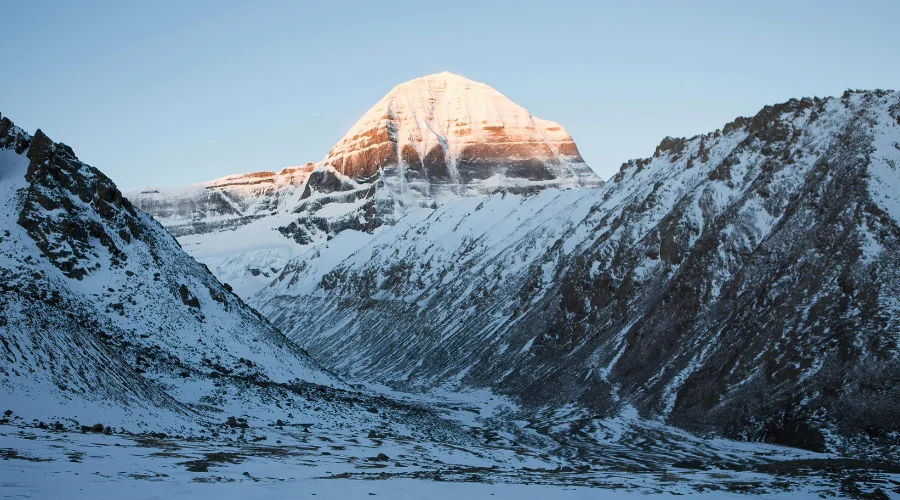
As they cross the path, the gentle waters of the lake stretch out to provide them with a sight to rest, reflect and pray before they resume the spiritual journey.
The Gauri Kund is located on the southeast side of Mount Kailash with snow-capped mountains, running rivers, and the serene scenery of the Himalayas. It is a spiritual destination as well as it is an amazing natural site because it is a combination of wilderness beauty of the high altitudes in addition to having religious attachment.
Gauri Kund Historical Background
Gauri Kund is based on the Hindu mythology and ancient spiritual traditions. It is assumed that it is the holy place where Goddess Parvati (or Gauri) had done the penance and meditation in order to deserve the love of one of the main Hindu gods, Lord Shiva.
The name of the Gauri Kund itself tells that it is the Lake of Gauri, which is the reason why it has some relation to the goddess.
As the old legends say, Parvati frequently bathed in the lake and meditated on the shores and hoped to be blessed by Gods. Through centuries, this lake was believed to be a holy place of spiritual cleansing and it turned out to be an essential destination for pilgrims who visited Mount Kailash and Lake Mansarovar.
The lake has been mentioned in a number of Hindu scriptures and local folklore in the past which highlight it as being sacred. It was also included in the ancient paths that linked Tibet and India, and thus, was accessible to pilgrims even back in ancient times.
Pilgrims think that the sins can be washed out either by a dip in Gauri Kund or by prayers there and so the spiritual desires.
Gauri Kund Mythology and Legends
Gauri Kund is enclosed with some interesting legends that point at its sacredness. According to one of the popular fables, the meditation of Goddess Parvati at the lake attracted the eyes of lord Shiva who tested her loyalty before her love was accepted. The lake is thus regarded as a venue which is a symbol of innocent effort, endurance and religious self-control.
There is also folklore in the area that the waters of Gauri Kund are curing. According to the pilgrims, the body and soul can be cleansed by drinking or bathing in the lake that enables the devotees to obtain spiritual power in order to complete their journey around Mount Kailash.
There is another interpretation of the lake in which the look of the lake was a gift of God. They say that the goddess was experiencing the sufferings of the severe Himalayan climate.
As she was performing her penance that is why gods made the lake to give her a place of calmness where she could do her purification and reflection. In the course of time the lake was a required ritual place where pilgrims present sacrifices such as prayers, flowers, and milk as part of involved rituals.
Natural beauty and all these ancient myths make Gauri Kund a mystical one. Even non-religious visitors usually experience the sensation of harmony and spiritual power as if the lake per se is subjected to centuries of worship and sacred tales.
Significance of Gauri Kunda in Religions
There is a very spiritual meaning with Gauri Kund among Hindu believers, mostly devotees of Lord Shiva and goddess Parvati. It is believed to be an effective meditation, prayer as well as purification site. Pilgrims assume that going to the lake and praying will help them getting rid of bad karma and achieving spiritual blessings.
The lake is frequently part of the Kailash Mansarovar Yatra among one of the most viable pilgrimages in the Hindu religion. Pilgrims will practice such rituals as holy baths, the performance of mantras, and the ability to make a gift to the goddess in the form of flowers or milk.
Gauri Kund is also regarded by many of the devotees as a way to reach Mount Kailash, both literally and spiritually. The performance of rituals at the lake is believed to precondition the sacred circumambulation (Parikrama) of the mountain.
Outside the religious tradition, the lake is considered to be the source of the positive energy and harmony. Together with serene waters, the Himalayan air that is very crisp and the surrounding peaks all of which combine to form an atmosphere where visitors feel that they are invariably at ease, concentrated and in relation to the spiritual aspects.
Connection between Gauri Kunda and Kailash
Exploring Gauri Kund, it is not merely a normal lake but is entirely connected with Mount Kailash, the sacred place that the people of all religions, Hinduism, Buddhism, Jainism and Bon.
It is also on the southeastern side of the Kailash Parikrama and thus one of the first significant stops that pilgrims check in on this challenging journey.
Among the individuals heading upwards, Gauri Kund serves as the relaxation place after passing Dolma La Pass which is the ultimate examination of the trek. A pause here will allow pilgrims to take relax and receive spiritual refreshment, and many feel that prayers and offerings on the lake will increase the effort they put into the circuit of Mount Kailash.
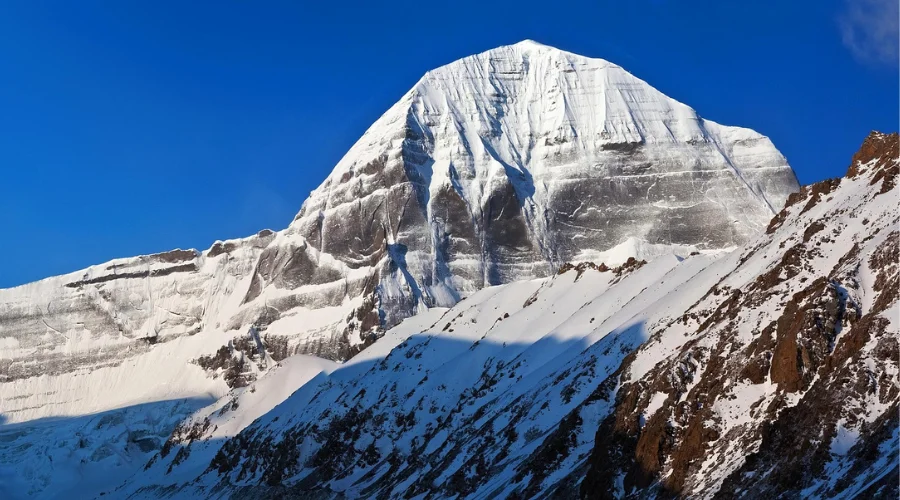
It is symbolic too, believe in blamelessness, devotion, goddess energies in Gauri Kund and the ultimate strength with the peak. They are a holy pair that lives to lead the pilgrims into spiritual light with a combination of both ritual and contemplation.
Practices and Rituals of Hindus at Gauri Kund
Gauri Kund, a center of all Hindu activities and spirituality, pilgrims tend to perform ceremonies that are claimed to purify the soul, giving blessings of goddesses.
Bathing in the lake is the most popular activity. It is believed that the splashing of the water in the ice-cold water cleanses the sins and bad vibes. Many people also discard milk, flowers, and incense in order to praise Goddess Parvati.
One more important aspect is chanting the mantras by the water; people recite mantras about Shiva and Parvati and entreat them to find their way safely and to be strong during their circumnavigation of Kailash. Some people also have fire rituals or havan at secure locations around them, contributing to the sacred atmosphere.
Other than individual rites, Gauri Kund can also be used by groups of people to hold a prayer; people who are on a cruise together pull up, meditate, think, and prepare psychologically for the next step, which makes the place feel auspicious.
Pilgrimage Experience: Expectations of Pilgrims
Reaching Gauri Kund is the main highlight of Kailash cycle. You normally reach there on the second day, after passing the difficult Dolma La Pass. It is a very steep and rocky road, you climb through the rough roads, and due to the elevation the air becomes thin, the only way to go is to move very slowly and continue.
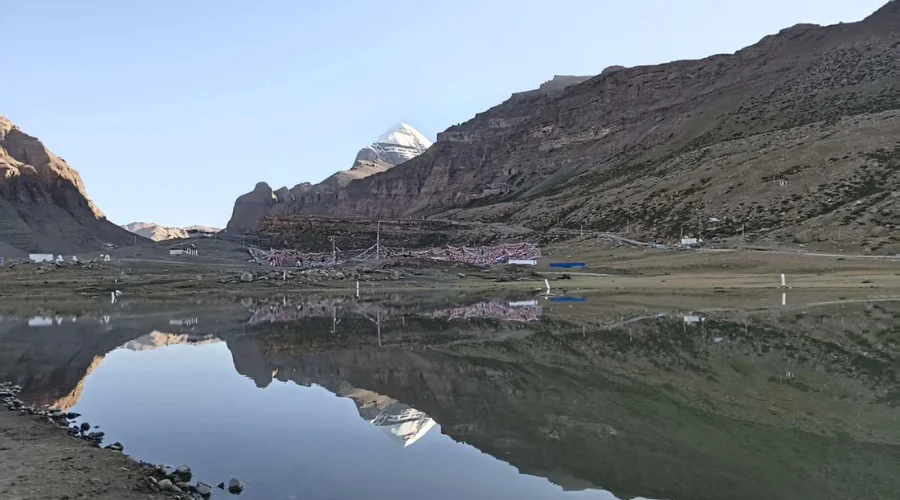
Then you see Gauri Kund, a pointed jewel of turquoise in the heart of desolate mountains, the green or bluish hue gleaming on rock and snow, to contrast with its gray. It is a moment that cannot be forgotten by the trekkers.
Best Time to Visit Gauri Kund
The best time to go to Kailash Mansarovar is May- September, when weather is good and roads are open. At the beginning of June or late May, the snow begins to melt, and walks a touch easier, and the weather is generally clear so great lines are formed of the Himalayas.
July and August are full of pilgrims, maybe some rain in it, but plateau is getting less than the Himalayas southward, and so the scenery keeps alive, the water view is beautiful.
September is another best time because the conditions are clear and there are fewer visitors, which makes it quiet and more peaceful.
Between October and April, you go through heavy snows, freezing temperatures and heavy winds; passes such as Dolma La usually close down. Due to the elevation and the nature of the wild, trekkers tend to take everything hard and organize into groups to make the process and experience worth it.
How to Reach Gauri Kunda?
The majority of us begin the trip at Kathmandu in Nepal. It is on this base that the organized pilgrimage tours take off heading northward to the Tibet border, typically via Rasuwagadhi Border before heading into Tibet to Kerung.
At Kerung, the trip continues on by road over the great Tibetan plateau to Soga and then to the base town of Darchen. Mount Kailash finishes at Darchen where the sacred Kailash Parikrama trek starts.
The journey around Mount Kailash takes three days on average. The first day we approach the mountain and go as far as Dirapuk, from which we have a good sight of the north side of the mountain.
Day two is the day about crossing Dolma La Pass that is the highest point of the route. Once you come down the pass you are able to finally see the beautiful turquoise waters of Gauri Kund below the trail.
Since it is so high and rugged, you must be in a fine shape and acclimatized. Majority of people attend structured pilgrimage groups that take care of transportation, permits, guides, and all the logistical arrangements along the route.
Surroundings of Gauri Kunda
The surrounding Gauri Kund is crammed with a cluster of sacred sites that are very critical to the pilgrims.
A good number of the major pilgrimage locations are within easy reach because the lake belongs to the spiritual land of Mount Kailash. All these locations combine to render the region one of the most admired spiritual regions in the Asian continent.
Lake Mansarovar is one of the largest localities. It is a sacred freshwater lake situated to south of the Mountain Kailash and also regarded to be one of the most sacred lakes in both the Hindu and the Buddhist religions. Pilgrims promise that the cleaning of the soul through bathing in Lake Mansarovar erases the sins that happened in the past.
Rakshastal is another landmark that is of immense importance, but a large salt water lake near Lake Mansarovar. Rakshastal is very enigmatic and unlike the quiet Mansarovar, it is linked to ancient myths of a demon king Ravana.
There is also cross Dolma La Pass which is crossed by pilgrims during Kailash Parikrama. That mountain pass is regarded as spiritually symbolic since worshipers believe that the passing of it is a new life without the sins of the past.
During the journey, you could also visit monasteries and meditation places which testify to the great Buddhist traditions in the region. These holy places make the entire trip take a special spiritual flavor in which both Hindu and Buddhist religion exist close to each other.
Tips on Traveling to the Gauri Kund as a Pilgrim
Visit to Gauri Kund should be planned well in advance due to the fact that the site is remote as well as high altitude location on the Himalayas. Before going to the trail, it is necessary to prepare for it physically and psychologically.
One of the best ideas to consider is that of acclimatization to the altitude. The lake is above 5,600 meters which means that you need to spend a few days to get wet before you start the Kailash Parikrama. That assists in reducing the risk of the altitude sickness.
Bringing in warm clothes, good trekking shoes and necessary medicines is also a good idea. The weather out there can change in a second and the temperatures can get drastically low even in regular time.
Ensure that you go with the authorized tour operators and guides already since you require special permits to access the Kailash area of Tibet. The organization of these groups normally takes care of transport, accommodation and the paperwork which ensures the travel is less complicated and accommodating.
Finally, respect spiritual and natural environment. Gauri Kund and the landscape around it are holy to most people, and therefore it is much important to ensure the area is clean and respects the local culture.
Send an Enquiry
Error: Contact form not found.
© 2026 - Himalayan Trekking and Tours (P) Ltd. All Rights Reserved.