

How do you feel standing on the edge of the world? Gorakshep immediately provides you with that answer upon arrival. After days of walking through bustling villages and on crowded trails, everything suddenly becomes quiet here.
The land turns dry and rocky. The air becomes thinner. Near the path are glaciers, and the mountains seem larger and closer than ever. Gorakshep is the only town in this unforgiving terrain and the last human settlement before Everest Base Camp Trek.
This is no comfort zone. It’s where you come to realize. In Gorakshep, each breath is longer, and everything you do requires exertion. But excitement is hard to dismiss.
From here, the trail goes to Everest Base Camp, and it is also towards the popular viewpoint of Kalapatthar. Trekkers take a rest, recover, and get ready for the final push. Gorakshep is a small, cold place, but it remains lodged in your memory long after you’ve returned from the trek.
Gorakshep: The Original Everest Base Camp
Gorakshep is not only a tiny, high-altitude village, but it also has a mountaineering past. It was the first Everest Base Camp for pioneering expeditions in the 1950s.
Before the current base camp was established near the Khumbu Icefall, climbers typically made their first attempt to reach the top of Everest from Gorakshep by moving up along a ridgeline that ends at Pumori.
The 1952 Swiss expedition came in via Gorakshep, ascending southwards over three high passes, coincident with other travel routes across and into Tibet.
The flat sandy ground here was well-suited for setting up camp to put down over a bone-shaking rest and acclimatize for the climb to come.
In time, as routes were found to be safer and more direct, the official Everest Base Camp moved eastward to the glacier below the icefall.
Gorakshep Population
There is no resident population in Gorakshep. It’s also not the kind of place where families dwell year-round. Gorakshep is just a seasonal settlement compared to the other villages along the Everest Base Camp trail.
During the main trekking seasons about 20 to 30 people will temporarily stay in Gorakshep. They’re mostly lodge owners, kitchen staff, and porters who hail from neighboring villages such as Lobuche and Dingboche.
Gorakshep is absolutely deserted soon after the trekking season, and winters are severe, when it becomes really silent and isolated.
Why is Gorakshep called the Last Village to Everest?
Gorakshep is often referred to as the last village before Everest, since it is the last point on the trail where trekkers can find basic shelter, food, and a place to rest.
Gorakshep and beyond is a no-people’s land with tea houses, lodges, or any permanent settlement.
After that, everything is different. The route passes under glaciers and over rock moraines and open fields of ice as we climb up to Everest Base Camp.
Due to the extreme altitude and cold, it is not feasible to construct or even have permanent habitation anywhere past Gorakshep. This makes Gorakshep the final human-sustained stop before confronting the raw Everest zone.
Another reason Gorakshep has the perfect sanctuary status is that it has played a historic role in Mount Everest ascents. Gorakshep was originally used as a base camp for ascending Everest before a new base camp was established at the foot of the Khumbu Icefall.
Today, all trekkers hiking to Everest Base Camp and Kalapatthar continue to do so via Gorakshep. It’s the point between ease and suffering.
For trekkers, the transition from populated land to virgin high-altitude wilderness is felt right at this place itself, and thus Gorakshep holds a great regard as the last village before Everest.
Altitude of Gorakshep and Oxygen Level
Gorakshep lies at an altitude of 5,164 m (16,942 ft), is one of the highest year-round settlements in the Everest region, and is generally used as a base camp from which to ascend Kalapatthar or access Everest Base Camp.
It’s thin up here; the oxygen-to-volume ratio is greatly diminished. Trekkers typically have a rapid heart rate and fatigue, and become short of breath while walking or performing normal activities like carrying a light load.
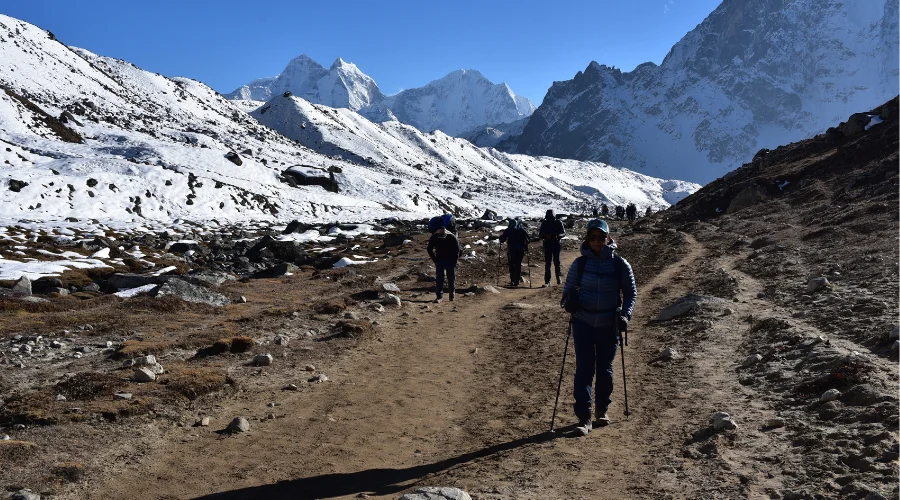
Gorakshep is brutal: It’s tough to breathe, and if you’re not well acclimated, that low level of oxygen can be a killer. Most trekkers spend only one night here to acclimatise and prepare for the final push up to Everest Base Camp or Kalapatthar.
You must take it step by step, and drink a lot of water; you shouldn’t do more. Good acclimatization and awareness of altitude sickness if you will be staying in this high-elevation town.
How Less Oxygen Affects the Trekkers in Gorakshep?
By the time you’re 5164 meters up in the air, there’s only one breath of air around you, and it contains just half the amount of oxygen in each lungful at sea level.
Thinner air may give trekkers a lightheaded feeling, sensation of breathlessness, or make them more sleepy than usual. Keep in mind that even basic actions such as strolling to the tea house or taking a few steps will become too exhausting.
Mild altitude sickness, including headache, nausea, and sleeplessness, for some trekkers. The exertion will be less due to low oxygen, so take it slow, rest often, and drink water.
Hikers are warned to go easy until they’ve acclimated. Oxygen cylinders that you can take with you on a hike, or acetazolamide (Diamox), may also relieve symptoms in some cases.
Trekkers who ignore those precautions are at serious risk for altitude sickness, which can lead to death at that elevation.
Helicopter Rescue from Gorakshep
Helicopter rescues are available from Gorakshep, but are hampered by altitude and weather. In good weather with only light winds, helicopters can safely land here. But the high altitude is challenging for pilots, and only a few varieties of high-altitude helicopters can fly safely.
You can usually get two people out at once, depending on the helicopter and weight. The majority of rescues have been for trekkers with high altitude sickness, injuries, or other medical emergencies.
Most choppers return to Kathmandu or Lukla after pick-up. Bad weather or heavy snowfall can make landing for rescue impossible, and trekkers should prepare an emergency alternative and consult trekking agencies before depending on a helicopter evacuation.
Deaths and Risks Around Gorakshep
Gorakshep is a high-altitude settlement, and acute mountain sickness is the highest risk in that area. Things like headache, nausea, dizziness, and shortness of breath do escalate if left untreated.
Deaths have been reported at Gorakshep. An Australian doctor died here of sudden illness during a trek in 2025, and in 2024, two other foreign visitors, a Chinese man and a British woman, also died suddenly on the mountain, likely because of high-altitude sickness. Other hazards are slipping, falling, severe cold, and sudden change of weather.
Trekkers are told to acclimatize and ascend slowly, stay hydrated, and see a doctor if symptoms worsen. With proper preparation and caution, staying in Gorakshep becomes far safer.
Accommodation Options in Gorakshep
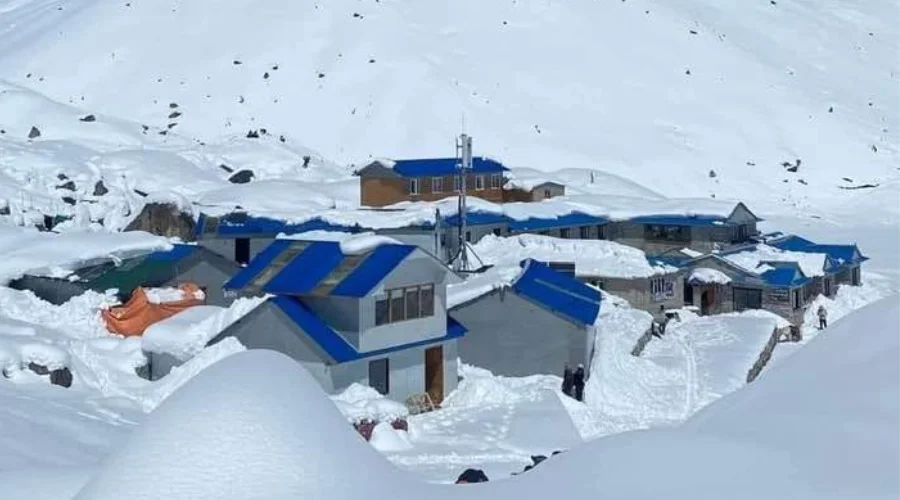
With only 6 tea houses in Gorakshep, it is one of the smallest towns along the Everest Base Camp hike. They are mainly operated during the spring and autumn trekking seasons and give simple accommodation to trekkers en route to Mount Everest Base Camp or Kalapatthar.
The rooms are simple and practical, generally with two or three beds, heavy blankets, and shared bathrooms. A small number of lodges have hot water for showers, but it is generally in short supply and is costly too.
Electricity is provided in most tea houses through solar panels or small generators, mainly for charging devices, but power can be intermittent.
Meals are basic but filling, with options like Dal Bhat, noodles, soups, and tea or coffee. Since Gorakshep is very small, lodges fill up quickly, so booking in advance during peak season is recommended.
The key tea houses in Gorakshep are:
- Snowland Highest Inn
- Buddha Lodge / Hotel Buddha
- Everest Inn / Hotel Everest
- Yeti Resort / Hotel Yeti
- Himalayan Lodge / Hotel Himalaya
- Kalapather Guest House
Food Availability in Gorakshep
Food in Gorakshep is basic and is meant to help trekkers at altitude rather than a fine dining experience.
The typical meal is Dal Bhat (rice and lentils), which fills you up and gives you energy for trekking. Most tea houses also make noodles, soups, pasta dishes, and boiled (steamed) momo that are easy to prepare and digest.
Fresh meat is rare and not always safe to eat because there is a limited supply, and storage of it at this altitude can be tricky.
Chicken or dry meat may be offered in some lodges, but most trekkers do not have to avoid an upset stomach. There is plenty of vegetarian food, and most places will be able to substitute vegan options, such as veg soup, Dal Bhat, and eggless noodles.
Drinks include tea, coffee, hot chocolate, and, in some lodges, traditional Tibetan butter tea. These are the kinds of drinks that keep you warm on those chilly mornings.
Because supplies are hard to come by, meals are expensive. Dal Bhat is typically $5-7 USD, noodles or soup $3-5 USD, and tea or coffee is approximately $1-2. It’s also recommended you bring some snacks like chocolate, nuts, or energy bars as options in Gorakshep are limited.
Weather and Temperature in Gorakshep
Gorakshep is 5,164 meters (16,942 feet) above sea level. Due to such elevation, the climate is not only severe but cold, dry, and unpredictable.
Night-time temperatures may hit below -10 °C to -14 °C even in the best trekking seasons of spring and autumn.
On sunny days, the temperature reaches 0°C-5°C. The climate may change quickly. The clear sky can be brought by dawn, but suddenly a snowstorm or intense winds may appear in a few minutes and make trekking, outdoor play, or even a simple walk challenging.
It is even colder in winter as the temperatures drop to below -20°C. Strong winds are frequent, and even relatively mild temperatures seem to be much colder.
Due to the thin air that is present at this altitude, the wind chill makes one susceptible to frostbite, and also, the exposed skin can easily become frosty.
The day is also hot, and there is a lot of sun exposure, which means that trekkers must have sunscreen, sunglasses, and cover-ups to prevent sunburns.
The majority of tea houses offer insular protection against cold by using blankets and heated rooms (where this is possible).
Please carry down jackets, thermal garments, gloves, hats, and heavy boots. Be properly outfitted because the weather in Gorakshep can change in a few minutes, depending on the conditions, from sunny and quiet to freezing and windy.
Facilities at Gorakshep
Gorakshep is small and is high in altitude, and therefore, facilities are not great in this region. It is primarily aimed at offering shelter, dining, and standard services to the trekkers before they proceed to the Everest base camp or Kalapatthar.
Accommodation and Beds: The six tea houses have simple accommodations that include beds and blankets. Bathrooms are shared, or common facilities, and the rooms are shared. Other lodges have hot shower facilities, although water is scarce and might be provided on a fee basis.
Power: The majority of tea houses come equipped with solar panels or small generators. Power is predominantly available to charging power phones, cameras, and other small devices, but the high altitude nature of the area can lead to inconsistency.
Water and Toilets: Water can be consumed in all the lodges, often boiled or filtered. There are only rudimentary toilet devices in the form of pit latrines or Western toilets, which are shared by many rooms.
Medical Help: Gorakshep does not have any hospitals; however, several tea houses have a first-aid kit. Helicopter evacuation is the primary care choice in case of severe medical urgency.
Wifi and Internet in Gorakshep
Mobile network signal coverage is still extremely poor in this high-altitude.
To have a mobile connection, the safest bet would be a personal Nepali SIM card, purchased at Kathmandu or Lukla, before the trek. There are two primary suppliers known as Nepal Telecom (NTC) and Ncell.
The SIM card will cost approximately NPR. 100- 200 (Approximately 1-2 USD) with a small initial credit. Then you can purchase data packages located approximately at 4-7 USD for a few gigabytes or higher.
NTC is expected to work a little better in high places, although mobile data generally ceases entirely past Dingboche and is highly unreliable at Gorakshep.
As a way to gain internet connectivity in Gorakshep, the majority of trekkers access a paid Wi-Fi at tea houses, usually via satellite such as the Everest Link or Airlink.
These necessitate the purchase of a prepaid Wi-Fi card that can cost between approximately NPR 800-1200 (6-10 US dollars), depending on the amount of time you have it (24-48 hours), as well as the provider and the package.
There is a slow Wi-Fi connection, which is available to everybody, but it is normally the best connection option at Gorakshep.
Most of the tea houses can charge your devices, which, however, is not free. The charge per gadget in lodges is typically a fee.
Particularly in higher altitudes, where there is reduced sunlight and electricity. It is strongly advisable to have power banks due to the limitation of electricity hours.
Distances from Gorakshep
Here’s a simple table showing distances from Gorakshep to nearby trekking points with approximate walking hours.
| Destination | Distance (km) | Approx. Walking Time |
|---|---|---|
| Everest Base Camp | 4–5 | 4–5 hours round trip |
| Kalapatthar | 1.5–2 | 1.5–2 hours one way |
| Lobuche | 4.5–5 | 2–3 hours |
| Thukla Pass (via Lobuche) | 8–9 | 3–4 hours |
| Pheriche | 10–11 | 4–6 hours |
| Dingboche | 13–14 | 5–7 hours |
| Pangboche | 17–18 | 6–7 hours |
| Namche Bazaar | 26–28 | 8–10+ hours |
Best Time to Stay in Gorakshep
The best months to go to Gorakshep are spring (March -May) and late autumn (September- November). These seasons are stable, the skies are clear, and rarely does the weather experience heavy snows.
There are cold but bearable temperatures, and the majority of the tea houses and lodges are running normally.
In spring, there will be sweet flowering, mid-sized crowds, and fair weather, whilst autumn will offer cool mountain scenery and cold trails.
These are the busiest seasons among trekkers with the intention of visiting Everest Base Camp or Kalapatthar.
The season (December -February) is very icy, and in the summer (June -August) season, the area receives much monsoon, and landslides are frequent, and access is very limited, so one would not like to stay over at Gorakshep during these seasons.
Gorakshep: The Last Stop
Gorakshep is not a village throughout the year; it is a seasonal village where they come in trekking months only. It is extremely high in altitude, and there are freezing temperatures, wind, and weather, making it impossible to live there permanently.
The tea houses are operated during the spring and autumn by a few individuals to assist trekkers. They are from the lower villages of the Everest. With the onset of winter and the halting of trekking, everybody goes, and the area remains deserted until the next season.
FAQs
1. Can you see Mount Everest from Gorakshep?
No, you cannot see the sight of Everest because it is obscured by mountains such as Nuptse. It is common to hike to Kalapatthar to have a clear view.
2. What is the meaning behind the name Gorakshep?
It is named after the Sherpa and denoted as dead ravens, which is an indication of the barren terrain.
3. Will we find Vegetation/wildlife in Gorakshep?
There is not much vegetation because of its altitude, but high-altitude birds and little wildlife may be seen.
4. Are there shops or places to buy gear in Gorakshep?
There is only simple food, beverages, and the necessary trekking equipment. The majority of equipment should be pre-bought.
5. Are there toilets in the teahouses of Gorakshep?
Yes. Tea houses also have common toilets, and trekkers need to have toilet paper and sanitizer.
6. Is It Better to spend the Nights in Everest Base Camp rather than in Gorakshep?
At the base camp of Everest, there are no lodges; trekkers camp at Gorakshep and they pay for a one-day trip to this camp.
7. Does Gorakshep have a Cultural/Memorials Site?
Yes. There is a small Buddhist monastery and climbers’ memorials of fallen climbers on Everest.
8. Does Gorakshep have an ATM /Banking Facility?
No. Trekkers should have enough Nepali Rupees to stay at a hotel, eat, and use Wi-Fi.
9. What mountains can you see from Gorakshep?
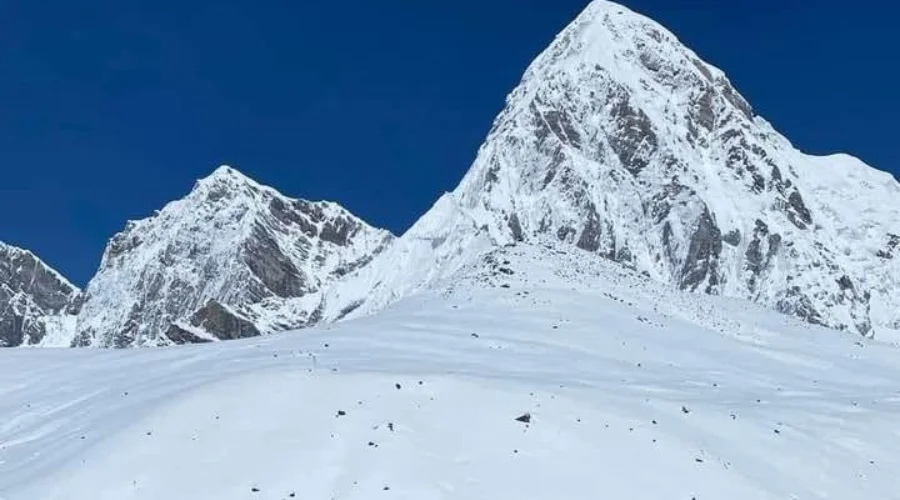
Nuptse, Lhotse, Pumori, and Khumbutse can be seen. Everest is generally covered up, and the Kalapatthar presents a complete view.
10. How many tea houses are in Gorakshep?
The six primary tea houses are also provided with food, accommodation, Wi-Fi, and some charging.
11. Is it safe to eat meat in Gorakshep?
Meat is also offered, but it is quite scarce and is not necessarily fresh. The majority of trekkers order vegetarian food.
12. Do You Take Hot Showers in Gorakshep?
The showers are mostly bucket showers and expensive. In the evening, tea houses offer warm water; it is advisable to carry your own hygiene kit.
13. What is the average stay of Trekkers at Gorakshep?
The majority of the trekkers take one day to acclimatize and rest, and then move into Everest Base Camp or Kalapatthar. Others take longer either to take photos or to further rest.
Send an Enquiry
Error: Contact form not found.
© 2026 - Himalayan Trekking and Tours (P) Ltd. All Rights Reserved.