

The Khumbu Glacier is more than what meets the eye. It is a powerful and dramatic force of nature. From Mount Everest, it flows down into the Khumbu region of Nepal. Each step-by-step it is raw, cold, and alive.
The glacier holds the well-known Khumbu Icefall, the deadliest stretch of the Everest route. Trekkers view it from base camp; climbers must cross it on the ascent. Blocks of ice shift, crack, and reset overnight; the passage changes daily.
The place shows Himalayan grandeur, human courage, but also the evidence of climate change. Standing there, one senses how small humankind is beside the natural world.
History of the Khumbu Glacier
Long before outsiders arrived, the glacier already belonged to the Everest locals. Sherpa families who have lived nearby for generations treated it as a mighty force that deserved respect.
Foreign explorers began to survey and cross the ice in the early 1900s while searching for a way to the summit. Once reconnaissance started, every southern expedition found the glacier to be the sole corridor to the mountain; no alternative existed.
Anyone approaching Everest from Nepal had to pitch camp on the glacier as well as face the Khumbu Icefall. Because of this, the ice stream became the most critical link in the entire route.
During recent decades, the glacier has hosted both triumphant ascents and fatal accidents within the Icefall.
It remains central to present-day climbs. Icefall Doctors cut a fresh path each season. Sherpas travel the route repeatedly to ferry loads. Climbers rely on it for access, acclimatization, or training. Without the Khumbu Glacier, an ascent of Everest from Nepal cannot take place.
Formation of the Khumbu Glacier
During the ice age, the Khumbu Glacier formed. Around Mount Everest, snow occurred yearly that did not melt in the summer. As new snow came in at a greater rate than it melted, the glacier took to shape.
Fresh snow fell and accumulated on top of what was already present from previous storms. That snow pressed the lower layers into ice. As the ice built up, it made a great depth; the Khumbu Glacier formed in that slow process of downfall.
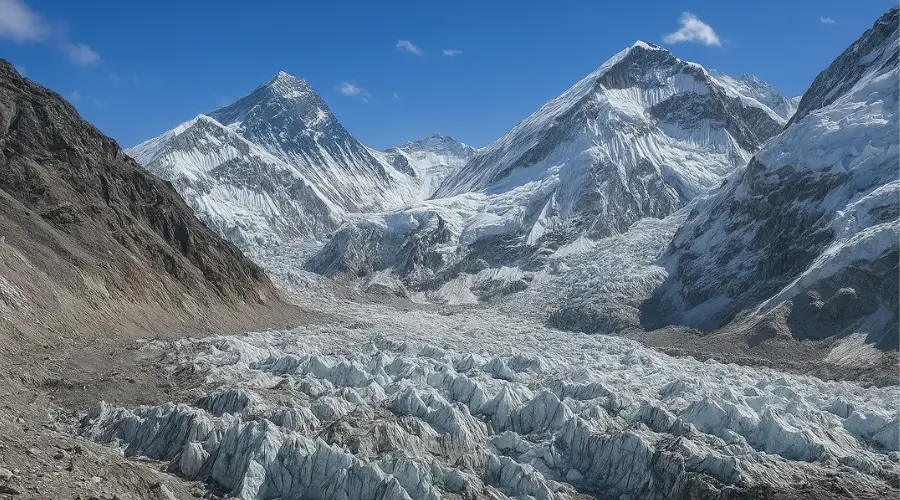
Western Cwm lies between Mount Everest, Lhotse and Nuptse. As the slope steepens, the ice breaks into deep cracks. Blocks of ice towered over the cracks turn the Khumbu Icefall into a hazardous maze.
Rock and in some areas large boulders from moraines have left the surface darkened, which also gives it a rough texture. The glacier is still in motion and transformation; it is by far the most active and least predictable in the Himalaya.
Where is the Khumbu Glacier located?
In the Khumbu area of the northeast in Nepal, within Sagarmatha National Park, a UNESCO World Heritage Site, the Khumbu glacier is located. It begins in the high Western Cwm and extends down to the foot of Mount Everest.
Lhotse and Nuptse surround the glacier. At South Base Camp of Everest, the glacier is the base and also the main south approach to the top of the mountain that passes over it. At Base Camp, visitors stand in the lowest point of the ice.
You might want to read more about: Where is Mount Everest Located?
Khumbu Glacier Distance and Height
In terms of size, the Khumbu Glacier is the largest in Nepal. The length of the Khumbu Glacier is 17 km, the longest in the Himalayas.
The glacier’s width varies along its length from a few hundred meters to over a kilometer in some places. The Khumbu Glacier covers an area of 10-12 square kilometers.
In the Khumbu Glacier, we see great variation. In the upper zones the ice thickness of the Khumbu Glacier may reach up to 300 meters.
At the base of Mount Everest, the glacier has reduced in size due to melting and debris cover, but still has large ice masses. These glaciers are very large crevices that go very deep into the ice.
The Khumbu Glacier also has a defined altitude range which is a notable feature. The glacier begins at an altitude of 7,600 meters in the Western Cwm and makes its way down to 4,900 meters near Lobuche.
At the base of the Everest mountain range, the Khumbu Glacier is found at 5364 meters, which is covered in rock.
Khumbu Icefall: Most Critical Section
The Khumbu Icefall is the most dangerous section of the Khumbu Glacier. It is the most dangerous areas on Mount Everest.
Between Base Camp and the Western Cwm, a section of the glacier drops away very steeply, and the ice breaks up.
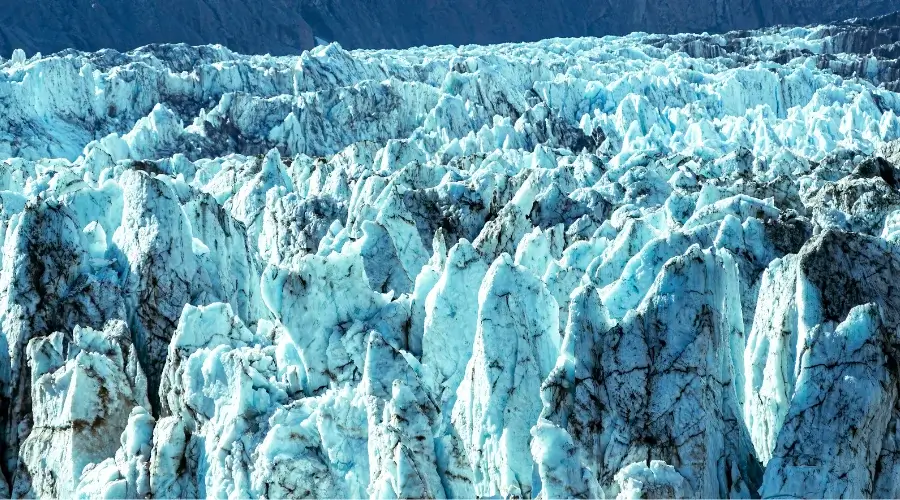
In this section, the glacier is in a constant movement, which is of an uneven nature. Large ice blocks called seracs are tall and do not present a stable structure.
Also, ice that has fallen into deep crevices goes down for over 100 meters. As the ice is in constant motion, the landscape is in a state of change. That which was a safe passage today may present danger tomorrow.
Everest Climbers are to the Khumbu Icefall. On the south route to the top of Everest, which we will do at least twice. Sherpas, the Icefall Doctors, put in ladders and ropes over the cracks, which in turn will create a temporary path.
Avalanches, ice structure failures, and sudden changes are the lot in life of the Khumbu Icefall, which sees many incidents of serious accidents on the Everest range. It’s a place that demands respect, experience, and precise timing of each visit.
Why do climbers cross the Khumbu Icefall at night?
Climbers go through the Khumbu Icefall at night mainly for safety. At night and in the early morning, temperatures drop drastically which firms up the ice and reduces the chance of it moving, cracking, or collapsing.
As the first light of dawn breaks out the ice begins to warm. It is the increasing temperatures that cause glaciers to react faster, and we see falling seracs and collapsing ice spans present a greater danger. Climbers reduce their risk of these hazards by getting to the summit before sunrise.
The other issue is that of predictability. The icefall doctors do repair the routes at night which is the quiet time when the glacier is at rest.
Night climbs also go for speed. Ice and snow at night are better to stand on, they have more traction. Nights are hard, but that is when we see the best chance at easy travel to the Icefall.
Time is an issue for climbers. At Khumbu Icefall, day and night are the same. It is a question of survival.
Key Incidents on the Khumbu Icefall
The Khumbu Icefall is a dangerous area which has seen many accidents over the years.
In 1970, a great disaster struck when a large icefall took place which killed many Sherpas who were out on a mission.
In 1994, an avalanche was the deadliest event in the mountain’s history. A massive rock serac came down early in the morning, which claimed the lives of 16 Sherpas who were out working on the ropes and putting in supplies.
In 2015 once again we had a disaster in the Icefall. There was a 7.8 magnitude Everest earthquake that set off avalanches which went all over the Mount Everest region, and at the Base Camp, we had a very serious avalanche which claimed the lives of both climbers and support staff.
Although the Icefall was a factor in this but it brought to light the fact that the area is very much at the mercy of natural forces which no amount of human effort will control.
The Icefall has also had a decrease in size however, we still see serious accidents. At times, there are reports of climbers who fell into crevices, ladders breaking, and ice blocks falling out of nowhere.
Icefall Doctors for Rope fixing
The Khumbu Icefall Doctors are unsung heroes of the Everest expeditions. They are skilled Sherpas, it is given to a few to open out safe ways through the Khumbu Ice Fall, the most dangerous part of the climb.
Each year the Icefall Doctors put in weeks of planning for the Icefall. They lay ladders over deep crevices, attach fixed lines to unstable ice, and watch for seracs which may fall.
Due to this work the mountaineers and support staff will see a reduced chance of falling or getting stuck in the Icefall.
Icefall doctors do very risky work. They deal with ice falls and avalanches daily on the mountain. Many of them over the years have lost their lives or been injured but what they bring to the table in terms of skill and dedication is what makes each Everest trip a success.
These doctors train and train other Sherpas and climbers in safe passage techniques, also they will study ice movement and report which areas are unsafe for travel.
Alternatives for the Khumbu Icefall
The South side of the Everest for climbers is very dangerous which is a result of ice movement and frequent rockfalls, which we call the Khumbu Icefall.
Researchers are looking at new alternative routes that may pose less risk.
In another option, from Gorakshep, we go the Nuptse ridge route which in technical terms means to go around a bunch of fixed ropes and iron ladders at the Icefall; also, into what you might call a very secure route for that year of the 2026 climb. Also we expect the path to be very safe during the 2026 season.
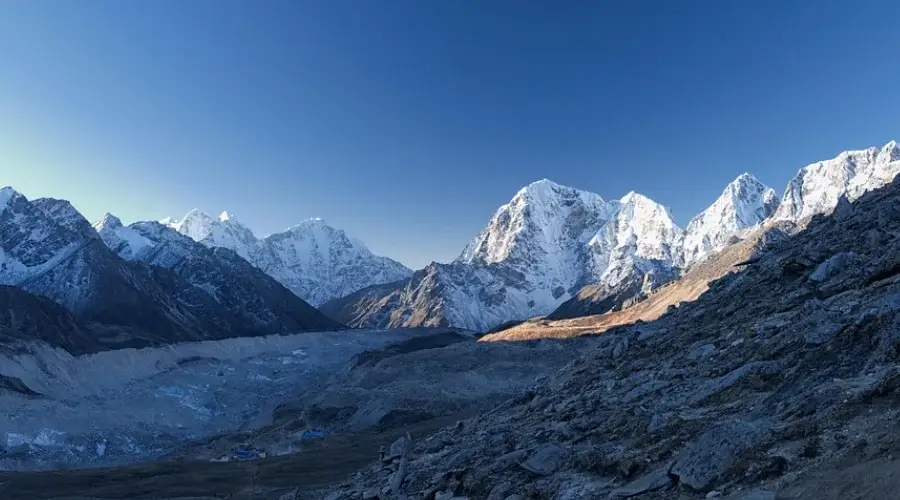
Another option is that of the Tibetan side (Tibet) which does not go through the Icefall. It brings along with it worse weather conditions and harder to get permits.
This in no way means that which other routes are not safer, and early on most climbers do in fact use the traditional Icefall route but some of the alternatives also present themselves.
Rivers Originating from Khumbu Glacier
The Khumbu glacier is a primary source of fresh water in the Everest area. The glacier’s melt feeds into many streams that flow through the Khumbu valley.
These streams feed the river Dudh Koshi, a major river in Eastern Nepal. The Dudh Koshi supports local ecosystems and agriculture as well as hydroelectric power in the area.
The glacier produces an average of millions of liters of water per month during the peak melt season which is May-September.
These streams are in the heart of villages like Namche Bazaar, Pangboche, and Dingboche. They provide for drinking, irrigation and livestock.
The Everest Base Camp trek which features glacial lakes and waterfalls that have formed from glacier-fed rivers which in turn make the trek a beautiful sight to see.
This issue of climate change is playing a role in the transformation of our water systems. We see that the glaciers are retreating at an average rate of 10 to 15 meters per is decreasing our stream supply and at the same time we see an increase in the chance of a glacial lake outburst flood (GLOF).
Scientific Interest Khumbu Glacier Research
In addition to being a natural wonder the Khumbu glacier is a tourist site for scientific research.
It is a primary subject of research that we turn to in order to study glacial topography, the progress of climate change, and the assessment of the Himalayan water resource which is a key element for millions of people living below.
Scientists are looking at glacier flow, melt, and movement. At the icefall and also with the ice rocks which travel to Khumbu we see how the glaciers react to temperature changes and the seasons.
High altitude glaciers’ features which include ice movement speed, crevasse depth, and ice thickness present to scientists who, in turn, model.
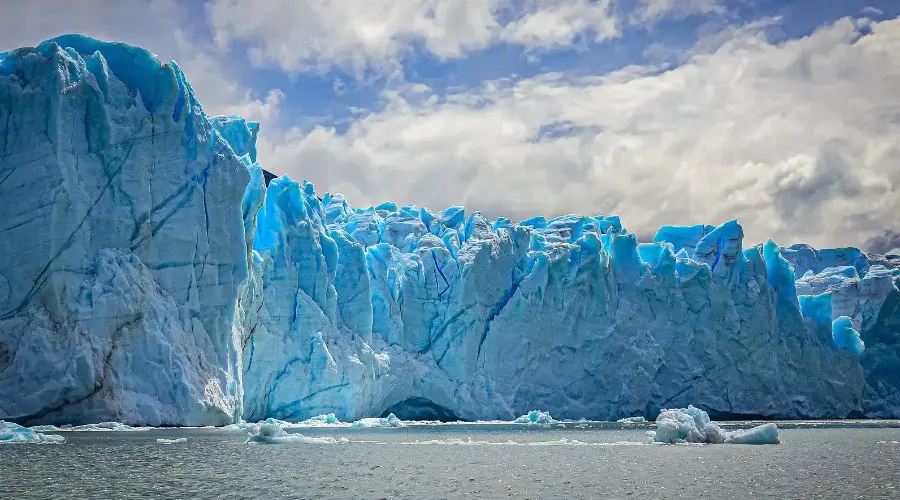
Climate change is a factor in the retreat of glaciers, in the case of the Khumbu Glacie,r that has been shrinking by several meters each year. This has in turn affected water supply and stability of climbing routes.
Lakes that have formed at the end of glacial periods are very much watched over as they tend to overflow into the local communities.
Hydrologists study which feed into the Dudh Koshi River. Seasonal water flow is a key element in terms of agriculture, energy production via hydropower, and the local communities’ material issues.
Kumbu Glacier Glacial Features and Landforms
Khumbu Glacier is a dynamic terrain with some of the most interesting glacial forms, which provide information about its past and motion. These are critical landforms, and they are in the form of mountains, glacial lakes, icefalls, and seracs.
Moraines: These consist of rocks and debris that are deposited by the glacier. The sides are lined by lateral moraines with two glaciers. They are dark and rocky lines on the ice and benefit scientists in researching the workings of glaciers.
Glacial Lakes: Glacial lakes form because of meltwater on the tracks of the glacier. Like certain ones, such as Imja Lake, are consequent to the retreat of glaciers and are observed as sources of flood risks (GLOFs). They provide these lakes to feed rivers and sustain local communities.
Icefalls and Seracs: On the steep areas, the glaciers separate into tremendous ice blocks known as seracs, which compose the Khumbu Icefall. It is considered spectacular and very hazardous to climb on people due to crevasses and moving ice.
Interesting Facts of Khumbu Glacier
- The Khumbu glacier is the biggest one in Nepal and measures approximately 17km along with a stretching area of about 36 km sq.
- Khumbu Glacier begins at approximately 7,600m near Mount Everest and passes to approximately 4,900m at Lobuche.
- The average movement of the glacier is 0.9-1.2m per day downhill.
- The glacier took thousands of years to form when the piled-up snow transformed into ice.
- It is filled with deep cracks (crevasses) and ice towers (seracs), which are always shifting their formations.
- The Meltwater feeds the Dudh Koshi River, serving the local communities and agriculture.
- Owing to global warming, the glacier is melting fast, which impacts the flow of water and the ecosystems surrounding it.
Conclusion
Khumbu Glacier is one of the most well-known natural phenomena that is filled with moving ice, sinkholes, and breathtaking scenery. It is critical in the Everest expeditions, water systems, and local communities.
Regardless of the risks presented by the Khumbu Icefall and the impacts of climate change, the glacier still attracts trekkers, climbers, and scientists.
A visit to it is an opportunity to observe the strength, exceptionalism, and dynamism of the Himalayas.
1. How old is the Khumbu Glacier?
The Khumbu glacier is estimated to be thousands of years old, and it was created during periods in which the Himalayas were colder.
2. Is Khumbu Glacier melting?
Yes, just like most of the Himalayan glaciers, it is receding because of the increasing temperatures and climatic changes.
3. Can the trekkers go to the Khumbu glacier?
One can go trekking in the area of the glacier, using the scenery of an Everest Base Camp, but the only ones who can pass through the Icefall must be advanced climbers, who have to pay a Sherpa.
4. Does the Khumbu Glacier have glacial lakes?
Yes, there are little melt water lakes that are developed along the glacier, and some ponds, such as the Imja Lake, are being observed due to the flood dangers.
5. Which animals can one observe around the glacier Khumbu?
The surrounding area has Himalayan snowcock, blue sheep, and Yaks, among other species that can be found.
6. What is the rate of movement of the Khumbu Glacier?
This glacier flows an average of 0.91m per day, forming icefalls and crevasses that keep changing.
7. Is the Khumbu Icefall climbing safe?
It is highly hazardous, and though Snow climbers cross it, ladders and ropes that are fixed by Icefall Doctors and Sherpas are used.
8. What is the peak height of the Khumbu glacier?
The glacier originates at Western Cwm at the near side of the above mountain of Everest, which is approximately 7,600 meters (24,900 feet) above sea level.
9. What is the impact on the Khumbu River of the Khumbu Glacier?
Its stream waters flow into streams that sustain the Dudh Koshi River important to the local people and industries.
10. Can we visit Khumbu all over the year round?
March-May and September-November are the most stable and favorable months to do the trek; the trek routes are available.
Send an Enquiry
Error: Contact form not found.
© 2026 - Himalayan Trekking and Tours (P) Ltd. All Rights Reserved.