

One of the most sacred lakes in the world, Mansarovar Lake, is located at high altitudes in the remote plateau on the western side of Tibet. For a lot of individuals, visiting Lake Mansarovar is more than a walk in the high Himalayas; it is a journey.
It is a sort of experience for the individual, almost emotional. Others hold the belief that the lake has supernatural powers, and some are just thrilled by the level of isolated beauty.
The lake has evolved into a destination to learn about the culture. Tourists typically go to the lake for the Kailash Mansarovar Yatra, called the Kailash Parikrama.
What is really behind this holy lake, then? What is the reason, and why do so many cultures and religions attach such significance to it?
We will learn about its location, history, myths, and spiritual meaning, along with providing some useful tips on traveling to this marvelous place.
Geographic Facts of the Lake Mansarovar
Lake Mansarovar is more than a symbol of spirituality. It is on the high plateau, at 4,590 metres (15,060 feet).
It’s clear fresh water is one of the most beautiful features. The water of Mansarovar is soft and crystal-clear. It is smooth unlike many plateau lakes that are salty and at times reflect the sky and the mountains that surround it.
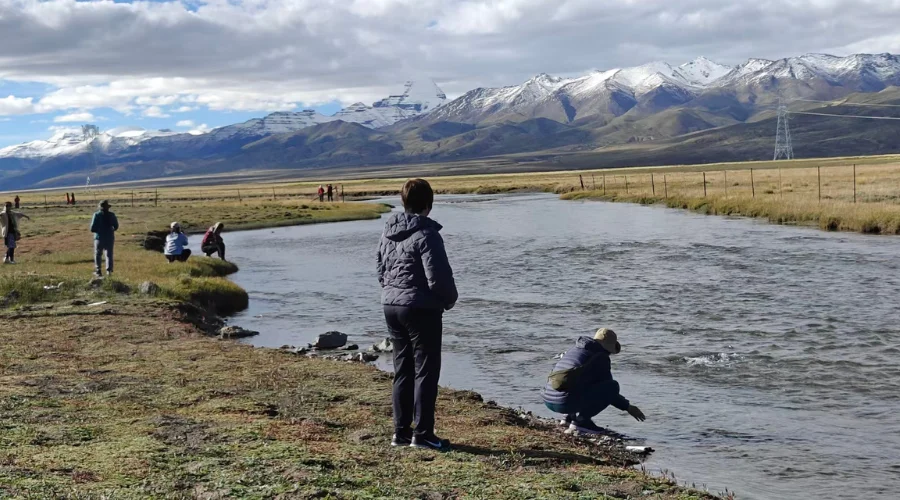
In the clear days, the reflection of the Mount Kailash appears upon it in a beautiful, peaceful view.
How Large is Lake Mansarovar?
It occupies an area of approximately 320 square kilometres, which is one of the largest freshwater lakes in Asia of high altitude.
The length of the shoreline is 88km long and pilgrims usually walk or drive along its north side which may take hours in a jeep or a few days on foot.
The lake has a average depth of about 45 metres though it can have a depth of up to 90 metres at the maximum. Due to the size and depth, it remains an important natural water body in the area.
Origin of Mansarovar Lake
The water in the lake is primarily melted by the glaciers, rains, and streams of water flowing down nearby mountain ranges. The lake is fed by slowly melting snow and glaciers of the surrounding Himalayas.
The cold weather causes the lake to freeze up frequently during the beginning of the late winter season, in particular, between the end of December and early spring.
During warmer seasons when the ice melts, the lake regains the deep blue color, which brings pilgrims and tourists in large numbers.
Source of Water at Mansrovar Lake
Although the lake by its own is not the cause of the large rivers, the area around it. The area near Mt.Kailash does contain the watershed of a few of the larger rivers in Asia.
There are four prominent ones that begin in the vicinity, i.e. the Indus, the Brahmaputra, Sutlej and Karnali. These are the rivers flowing in Tibet, India and Nepal which sustain the lives of millions of people on their way.
Due to this special geographic location, Lake Mansarovar is mentioned to be one of the most significant water source zones in Asia. The combination of the rivers, terrain, and religion makes the location a magnificent meeting-point of nature, culture, and religion.
Is Mansarovar Lake Origin of the Major Rivers?
Although Lake Mansarovar in itself is not the origin of the big rivers, the area surrounding this lake, landmarks and the area surrounding Mount Kailash, is the watershed to various Asian rivers.
On the side of the Indus, there are four prominent ones, namely the Indus, Brahmaputra, Sutlej, and Karnali. These rivers run through Tibet, India, and Nepal, serving millions of people along the way.
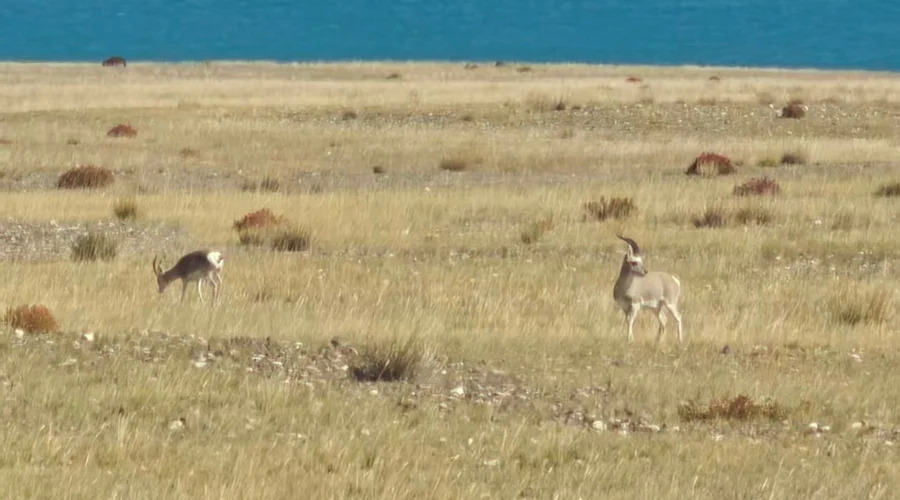
Due to such an extraordinary geographic position, the Lake Mansarovar-Mount Kailash region is frequently claimed as one of the most essential areas of water sources in Asia. This combination of rivers, the geography, and spirituality makes the place a grand gathering of nature, culture, and faith.
Historical and Mythological Background of Lake Mansarovar
Lake Mansarovar is a story that reflects the thousands of years ago. The lake was well featured in ancient books and journeys of explorers, even before there were modern travel routes to the plateau. Pilgrims, monks, and travelers have come to visit the place over centuries, leaving a mark of cultural values.
According to ancient Hindu scriptures, it is a divine body of water that was formed by the mind of Brahma. The Temple of Mansarovar is actually a compilation of the Sanskrit terminologies Manas (mind) and Sarovar (lake).
These books state that it is Lord Brahma who first visualized things, meaning the lake in his mind before the lake appeared on the Earth. Due to this belief, there are several Hindus who use the lake as a holy and spiritual location.
The existence of the lake in past also indicates that it was a great place where pilgrims used to travel towards the sacred Mount also known as Kailash.
The history of Buddhism is also very closely related to Lake Mansarovar. According to many Sutras of Tibetan Buddhist cultures, the lake was where monks, spiritual masters, travelled in the process of making meditation trips like tours around the mountain in Kailash.
Old monasteries constructed within the localities were rest places of monks and pilgrims who passed by this remote territory.
The lake has also been mentioned in travel diaries of the early explorers and scholars who visited Tibet. The earliest accounts of the travelers had a few details of the lake.
It was a soft body of water, enclosed in a broad open plain and by snow-covered mountains. These are the initial reports that brought Lake Mansarovar to the attention of the world.
Bathing at Mansarovar Lake: When and How?
Taking a bath in Lake Mansarovar is a highly religious experience among most pilgrims and followers of the faith. Although the visitors are free to take a bath in the lake, one has to do it in respect of religious practices and local tradition.
The lake is normally best suited to be bathed in the morning hours, about an hour after the sunrise. Waters are still at this moment, the environment is silent, and the reflection of Mount Kailash contributes to the outline of serenity and calm.
A large number of pilgrims also want to take a bath during certain religious days like during full moon days, Maha Shivaratri day, or during religious festivals, as they consider the spiritual value of the bath to be of more significance during such days.
The seasons of spring and autumn are the best seasons as the weather is not warm and as well as the water is not freezing. Visitors ought to be modest and respectful when approaching the water when taking a bath.
The majority of the pilgrims adhere to the traditional rituals and they wash their feet and hands first, pray before entering the lake,and walk into the waters slowly. One should not spend too much time in the water since the lake is of high altitude and the water is usually cold even during the warmer seasons.
A lot of pilgrims would sprinkle the holy water on them instead of complete immersion and others would immerse themselves as long as they are used to cold water.
Other things that should be avoided include disrupting the rituals of other pilgrims and to ensure that the lake area is clean. It is forbidden to take soap or chemicals to the water.
What is So Important about Lake Mansarovar?
Lake Mansarovar is ranked as one of the most holy lakes in the world. It is significant due to a mixture of religious faith, natural beauty, and location along with the holy Mount Kailash. Thousands of years, representatives of other cultures and religions covered long ways only to arrive to this peaceful lake.
The strong religious value is one of the key factors that explained its significance. The Hindu regard the lake to have a relationship with the creator god Lord Brahma and as a sign of purity.
A good number of pilgrims feel that they can be cleansed of sins by bathing in the lake and attain spiritual peace. Owing to this faith, paying a visit to Lake Mansarovar is one of the sacred places among Hindus.
The lake has a lot of significance in Buddhism, Jainism, and Bon faith. These traditions believe that the lake is a spiritual reflection and meditation site to followers. The serene environment, clean water and the fact it is around Mount Kailash make the atmosphere very peaceful to a great number of people.
Besides being of religious significance, Lake Mansarovar is significant in other aspects due to its distinct position within the Tibet Plateau. The area surrounding the lake is regarded as the birthplace of some of the biggest rivers within the Asian continent that serve millions of people in various nations.
The lake is also special to travelers and nature lovers. This is the most beautiful natural scene in Tibet, as its clear blue water, expansive open lands, and mesmerizing mountain views of the mountain encircling it make it a very beautiful place to be.
Religious Values of Lake Mansarovar
Lake Mansarovar is a rare location in the world, which is sacred among various religions simultaneously.
The followers of other religions have been in this far-flung lake in search of spiritual peace, blessings, and purification. The fact that the lake is close to the sacred Mountain, Kailash, makes it all the more significant in most religious beliefs.
Hinduism
Lake Mansarovar was created by Lord, Brahma in Hinduism. The ancient scriptures say that the lake was initially created in the mind of Brahma and then it came into being on Earth. Due to this beliefs, water of the lake is believed to be very pure.
Most of Hindu pilgrims are of the view that a holy bath in the lake is capable of washing the sins of a lifetime and aid the soul to ascend to the path of spiritual freedom.
It is also closely related with Lord Shiva who is assumed to be dwelling in the nearby Mount Kailash with Goddess Parvati. This is why it is common to visit Lake Mansarovar as a part of a holy pilgrimage, the Kailash pilgrimage.
Buddhism
The lake is also highly regarded in Buddhism and as a part of spiritual cleanliness and awakening. According to Tibetan Buddhists, the lake makes you feel that your mind can finally find a rest and clear up the same way the water of the lake is still.
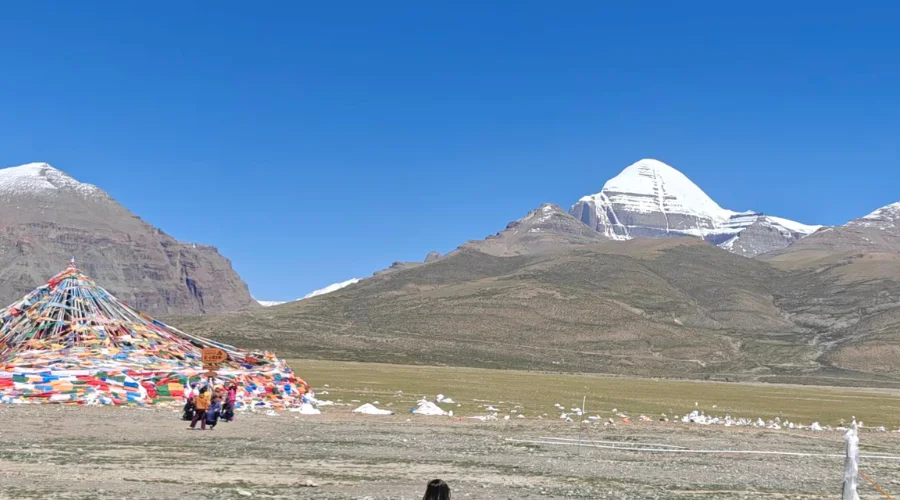
Numerous pilgrims and Buddhist monks flock there in order to meditate and perform rituals. This region of Mount Kailash and Lake Mansarovar is reported to have been frequented by some of the biggest spiritual gurus in the past and that adds to its spiritual atmosphere even more.
Jainism
According to the Jain tradition the piece close to the mountain Kailash, was believed to be the place where the first Jain Tirthankara, Rishabhanatha, struck enlightenment. Due to the proximity of Lake Mansarovar with that sacred mountain, the lake is also revered by the Jain and they usually stop by on the pilgrimage.
Bon Religion
The Tibetan religion that is ancient and is known as Bon also labels the region as sacred. The Bon believers know that there is a significant spiritual energy in the area of Mount Kailash and Lake Mansararovar and has been an attraction to rites of passage and activities long before the spread of Buddhism in Tibet.
It is revered by so many religions; therefore, Lake Mansarovar is usually regarded as a special spiritual intersection point where divergent cultures have the same sacred horizon.
Monasteries Near Mansarovar Lake
There are a number of old monasteries scattered around Lake Mansarovar which give the place a spiritual, as well as cultural touch.
These places have been points of rest, seat of meditation and centres of pilgrimage over centuries with the Buddhism and Bon traditions, and also accepting visitors all around Asia.
Chiu Monastery
One of the oldest there is Chiu Monastery which is on the southern shore. It has been one of the largest centers of Buddhism learning and meditation where monks and pilgrims have been attracted all through. It can easily be accessed by road through the main Kailash route which is why it is a popular pit stop.
Tarboche Monastery
On the north side, there is Tarboche Monastery which has got a beautiful architecture and cool atmosphere. Before or after taking the holy bath in the lake, pilgrims enjoy taking a hit in this place making wishes and prayers that they will sail safely.
Zhangton Monastery
This one is smaller set close to the western shore but it remains historically cool. It has been a haven of Bon enthusiasts and is among the holy meditation retreats. Tourists tend to experience the serene Tibetan plateau view directly in combination with spiritual doctrines.
Significance of the Monasteries
These monasteries do not exist only as places of worship, they are treasure houses of culture. You will discover antique scriptures, murals and statues that will allow you to have a better insight into the Tibetan Buddhist and Bon customs.
To pilgrims, they act as mentors in rituals and spirituality and this means that practices of hundreds of years ago continue to prosper.
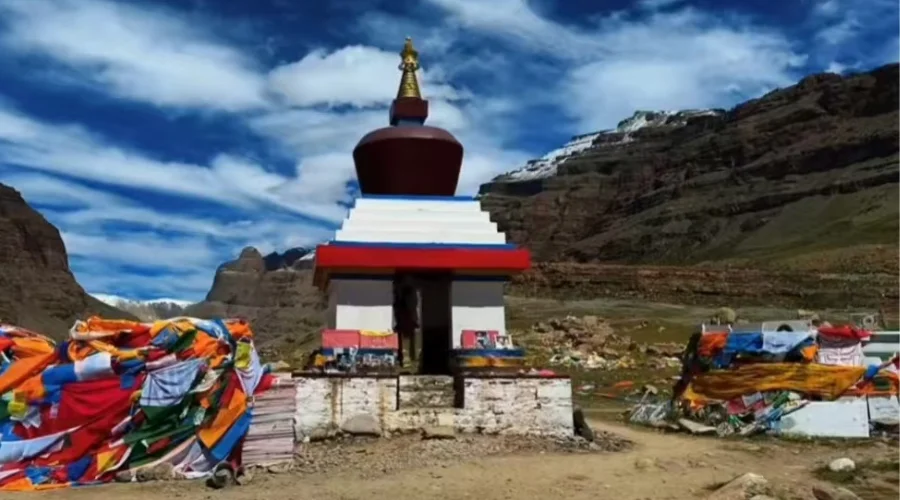
Tourist Attractions of Lake Mansarovar
One of the best experiences in the world, experiencing Lake Mansarovar is a combination of the beauty of nature, the spiritual force and cultural richness.
The lake can offer all types of people whether you are a pilgrim who is taking breaks to get purified or a traveler seeking epic landscapes. Here are the main highlights:
- The Crystal‑Clear Waters
The blue water of the lake shows the peaks, and it looks absolutely picture-perfect. Many people get amazed by the quietness and pristineness it appears to have, particularly in the early morning when the water reflects an adjacent Mount Kailash in perfect harmony.
- Sacred Pilgrimage Route
Lake Mansarovar is one of the major parts of the Kailash pilgrimage circuit. Tourists usually carry out rituals, prayers there. Walking or participating in rituals would make you feel the strong religious meaning of the region.
- Unique Flora and Fauna
Although it is elevated, it is a place where there is rare Tibetan plateau fauna and flora. Migratory birds and some rare high altitude vegetation and flora may be found in the shoreline and contribute to the nature.
- Proximity to Mount Kailash
The lake lies directly near Mount Kailash which is around 32km away and therefore the lake provides incredible chances to get marvelous views of this holy mountain. Numerous tourists visit the destination when the sun rises or sets so that they can see the mountain reflected in the water, and leave their memorable photos.
- Peaceful Atmosphere
It is remote to ensure peace and serenity. It is the best place to have some thoughts, meditate or simply enjoy the beauty of nature with the high-altitude plateau, wide-open vistas and little urbanization to encourage it.
Best Time to Visit Mansarovar Lake
Spring is the most suitable time start your lake trip. The snow begins to melt away, the roads become free, and the temperatures remain in that indescribably good state between comfortable and nice.
The lake emerges out of winter and those greenery hues and mountains flower patches just at the top of the wood all make the scenery more vibrant.
During the summer, the lake is absolutely ice-free, and you have a deep-blue water. However, it is also important to remember that the monsoon which surrounds the area can reduce the roads to a form of mud. Despite these bumps, a ton of worshippers go out in summer since they are geared towards festivals and more convenient travel times.
Autumn is the dream for the photographer. The air is clear, the visibility is not dull and the reflection of the Kailash mountain in the water is incredibly beautiful. The temperatures during the days remain cool, and it is an ideal combination of the best weather, lesser traffic, and nicer view.
The least popular is during winter time, heavy snow, freezing temperatures and at times the lake freezes. Highways may be viciously rugged. The trip will only be tried by hardcore and well prepared travelers who are accustomed to the cold winter weather at high altitudes.
Send an Enquiry
Error: Contact form not found.
© 2026 - Himalayan Trekking and Tours (P) Ltd. All Rights Reserved.