

The Everest Base Camp Trek helps you feel more comfortable, depending on your location. Having a hot shower, charging, and electricity vary with the altitude and the position between Lukla and Everest Base Camp.
The teahouses provide these services, and the more basic the facilities are as one ascends higher into the mountains.
Most teahouses on the EBC route depend on hydropower and solar power. Electricity is stabilized in lower villages such as Lukla, Phakding, and Namche Bazaar. Hot showers are more convenient, and the charging machines are typically not hard.
Services also get limited as the expedition moves further to Dingboche, Lobuche, and Gorakshep. The primary source of power is solar panels, and hot showers are not always present.
Trekkers are also advised to know that such services are not available at room rates. Hot showers and voltage to charge electronic devices are normally charged additionally.
We will explain each of the EBC Trek facilities separately in the subsequent sections.
You will know the availability of hot showers, how to charge the cellular phone in the teahouse, and the type of electricity source available in the Everest Base Camp Trek.
Hot Shower During the Everest Base Camp Trek
The Everest Base Camp Trek has hot shower services and is available in most villages on the route. After spending hours walking in the cold and wind, most trekkers are looking forward to a hot shower.
Please note that hot showers in the Everest region rely on altitude, weather, and sources of energy. As you go higher, the fewer and more costly these facilities are.
Hot showers are mostly optional services offered in teahouses. Hot showers are usual in the lower villages, but not everywhere in the higher ones, such as Lobuche and Gorakshep.
Availability of Hot Showers in Teahouses at Everest
Most of the teahouses in Lukla to Dingboche have hot showers. Hot shower facilities are available in every teahouse at such villages as Lukla, Phakding, Monjo, and Namche Bazaar all day long. There is increased accessibility to water, electricity, and gas supply in these villages.
The availability begins to reduce beyond Namche Bazaar. Hot showers continue to be available in Tengboche, Pangboche, and Dingboche, though this is subject to sunshine, fuel supply, and temperature.
Due to the weather conditions (cold or cloudy days), teahouses can restrict the usage of hot showers or even cease the service.
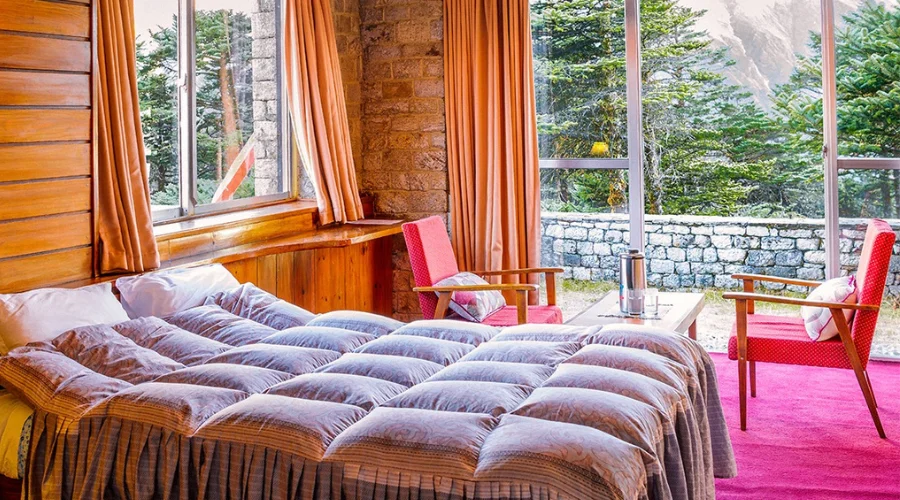
Hot showers are not assured in Lobuche and Gorakshep. There are very limited teahouses, which provide bucket showers, and at times.
Though many trekkers do not shower here because of near-freezing temperatures and water constraints, it is better not to take a shower in these villages in their quest for safety and comfort.
Types of Hot Shower in the Everest Region
Hot shower services at the Everest Base Camp Trek are of three main types.
The presence of gas showers is mostly in low-end villages. Such systems warm supply gas cylinders and supply a constant stream of warm water. They are easier to depend on and comfortable even on cold mornings or on cloudy days. There are gas showers usually in Lukla, Phakding, and Namche Bazaar.
In mid-villages to higher ones, the most prevalent shower is solar-heated. In teahouses, solar panels help warm water during the day. During the hot sun, solar showers will be warm or hot, particularly in the afternoon. In rainy seasons or when it is winter, the water can be cool or not available.
Very high villages have water and power that is limited, which is why bucket showers are used. Hot water is heated by itself and offered in a bucket. You use a mug to bathe. This technique is water and energy-saving and safer in extreme cold. Lobuche and occasionally Gorakshep have bucket showers.
Cost of a Hot Shower in the Everest Base Camp Trek
The cost of hot showers goes up proportionally to the altitude because of transportation challenges and scarcity of fuel.
Hot showers in Lukla and Phakding normally cost about USD 3 to 4. At Namche Bazaar, one takes a hot shower at USD 4-6, depending on the teahouse and the time of the year.
From Tengboche to Dingboche, the price goes up to approximately USD 6-8. Hot showers would cost USD 8 to 10 or higher in Lobuche and Gorakshep.
During the busiest trekking seasons, such as spring and autumn, the prices are increased.
They pay per shower and not per stay, and the cost also depends on what type of teahouse you are staying at.
Please note that you do not need to pay for the hot shower cost if you are staying in a luxury Everest teahouse with us.
Hot Shower Between Lukla and Gorakshep
Hot showers are consistent and can be found consistently between Lukla and Namche Bazaar. Such villages are more appropriate in terms of infrastructure and availability.
Hot showers will be mostly provided between Namche Bazaar and Dingboche, but again, they will be weather-dependent. Solar heating systems are only effective on a bright day.
Between Lobuche and Gorakshep, there are hot showers, which are limited in number and not always available. Waters pipes may bring a freezing process overnight, and heating of water becomes challenging.
A lot of trekkers make use of wet wipes or do not have showers at this point of the trek.
How to Take Hot Baths in the High Altitudes of the EBC Trek?
In the afternoon, when the temperatures are higher, solar heating is effective; one will get the perfect time for taking a hot shower.
Showering should be short to retain body heat and save water. Do not wash your hair often, as this increases the chances of cold and high elevation discomfort.
After the shower, dry yourself off altogether and put on warm clothes. One should avoid hot showers when they are feeling fatigued, dizzy, and unwell because the symptoms of altitude sickness may get worse when there is exposure to cold.
Have wet wipes, dry shampoo, and microfiber towels as an alternative. They come in handy to take hot showers where there are no available hot showers in the higher villages.
Learn the differences between Normal and Luxury Everest Base Camp Trek.
Charging Facilities on the Everest Base Camp Trek
The Everest Base Camp Trek has charging facilities, which are not excessive even though they are not very common at higher altitudes.
Although most of the trekkers bring mobile phones, cameras, and power banks, the power supply in the mountains is not powerful enough to charge very frequently or quickly.
Electricity sources vary with elevation, and it has a direct influence on the speed of charging, price, and availability. Charging can be done by trekkers at low charge rates and expensive price points as the trek advances.
Mobile and Camera Recharging in Teahouses
Charging is generally not a problem in villages like Lukla, Phakding, Monjo, and Namche Bazaar. There are numerous teahouses in the regions with charging outlets available in the rooms, allowing trekkers to keep their gadgets charged overnight.
In Tengboche, Pangboche, and Dingboche, one will hardly be able to charge in the room. Most teahouses request trekkers to charge their devices in the dining area or at the check-in desk.
This is because the electricity available is small and is unable to power a high number of devices that are charging simultaneously. In such places, the charging is normally done at special times when there is a power supply.
Charging at the higher villages, such as Lobuche and Gorakshep, is quite difficult. Mostly, teahouses utilize solar energy that has low voltage.
Through this, camera batteries and big power banks will not charge themselves or may require a significant number of hours to acquire just a minor portion of power.
There are even lodges that will decline to charge the camera batteries, citing that the voltage is too low and may end up damaging the battery.
The speed of charging mobile phones is low, and they cannot be charged fast at this elevation.
Explore the Everest Base Camp Luxury Trek with us in order to reduce all these extra facilities charges.
Cost of Charging Devices at the EBC Trek
The Everest Base Camp trek does not have free charging options. The cost goes up as the altitude goes up, as energy sources are limited, and transportation of fuel is very costly.
In the villages such as Lukla and Phakding, a mobile phone would be free. The price in Namche Bazaar lies between USD 3 and 5, based on the device. Some teahouses might even offer free charging till Namche.
The cost of charging a device at Tengboche to Dingboche ranges from USD 4 to 6. At Lobuche and Gorakshep, it may cost USD 5-7 per device to charge, and in other cases, power banks may be charged at a premium rate.
Lower vs Higher Villages: Charging Facilities
Hydropower is available in lower villages, and it is a more reliable and stronger source of electricity.
Most of the charges are quicker, regular, and in most cases, rendered at any time of the day. These areas usually do not have problems with charging multiple devices for the trekkers.
In upper villages, electricity is more solar panel-based. The power output is low, and the charging requires a lot of dependence on the weather. Electronics can be charged a little or not at all during cloudy days or not at all during winter.
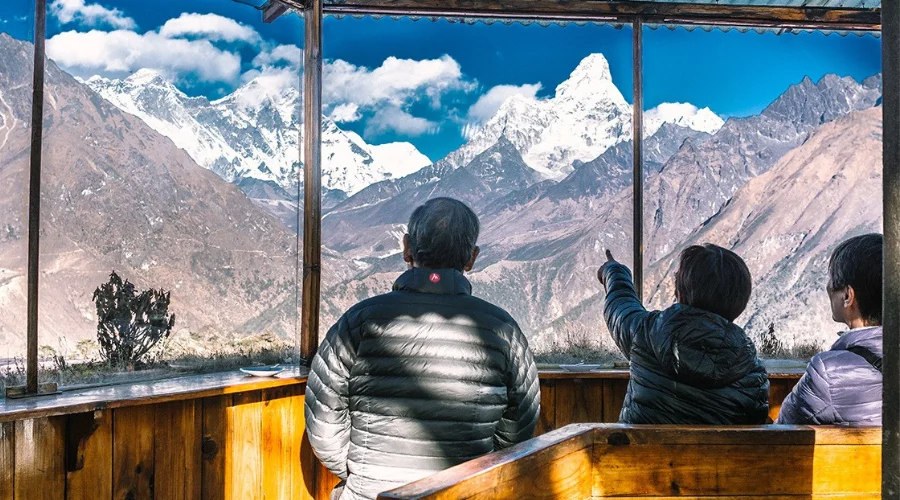
Another frequent problem is low voltage that makes gadgets slow to charge or cease to charge before the battery is fully charged.
Type of Charging Socket in EBC Trek
On the Everest Base Camp route, most of the teahouses use the standard power sockets in Nepal.
These are usually two-pin round sockets and three-pin round sockets. There are more three-pin socket lodges. Since the socket type differs per location, it is highly important to have a universal traveling adapter.
A phone that usually takes one hour to charge in the lowland will take two to three hours at elevated levels. Low voltage tends to ensure that fast charging does not work.
In more rural areas, the owners of teahouses can turn off devices after recharging or can fix on a time constraint to avoid power overload.
Battery Saving Tips during EBC Trek
The Everest Base Camp Trek requires very serious attention to battery management. Higher altitudes have a weak signal, leading to faster battery drainage in the phone.
Cold conditions also cause bad batteries performance, particularly at night.
Warm the devices and use them sparingly and have a good investment in a power bank to keep the gadgets going throughout the trip.
Electricity Supply at Everest Base Camp Trek
The supply of electricity in the Everest Base Camp Trek is very low, and the supply is mainly reliant on the location and altitude of the villages. Smaller villages are usually better equipped with electrical power, and larger villages use solar power.
Hydropower and solar energy are the major electricity-generating resources within the EBC route. Smaller hydropower stations are mostly connected to lower villages like Lukla, Phakding, and Namche Bazaar.
These are more stable and powerful in their electric power, which enables teahouses to have regular hot showers, charge devices, and light.
Higher villages such as Tengboche, Dingboche, Lobuche, and Gorakshep are supplied with nearly all the electricity generated by solar panels. The sun uses energy, and the batteries capture it, which is limited to use in the evening.
Due to weather and low voltage, the electricity supply in these places is limited. Teahouses tend to use it solely as the necessary light, for charging mobiles, and minimal devices.
Availability of Electricity in Lukla to the Everest Base Camp
The power supply is quite stable between Lukla and Namche Bazaar. Most teahouses have showers, gadget charging, and simple equipment during the day.
In between Tengboche and Dingboche, there is still electricity available, although it is not consumed very often due to the reason that power is derived through solar panels.
Only necessary functions such as lighting, phone charging, and in some cases, heaters are used and only at specific time periods.
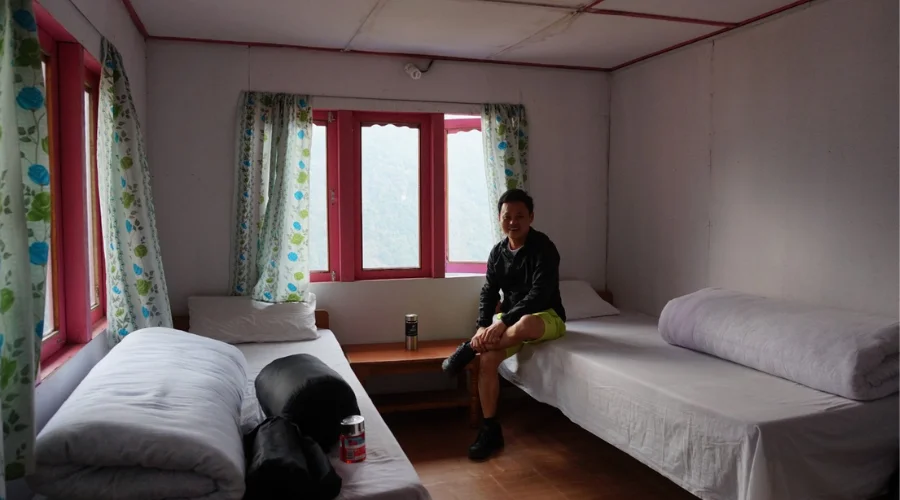
There is very minimal electricity in such villages as Lobuche and Gorakshep above Dingboche. The solar panels generate very little power that should be distributed among the teahouses.
The charge on the devices is slow, there are fewer sockets, and devices with high consumption, like heaters or hair dryers, are not possible. Trekkers are advised to prepare as such and carry other forms of energy.
Do Gorakshep and EBC have Electricity?
Mostly in Gorakshep and EBC, they use solar systems that are present in a few teahouses that are primarily used to power the lights and charge a few devices.
Hot showers are not very common or not at all, and the charge is not quick and costly. To remain in touch, a lot of trekkers have been using power banks, spare batteries, and solar chargers, as one cannot be assured of continuous electricity in these high-altitude settlements.
Solar Power and Alternative Energy on the EBC Trek
Basic facilities that need solar power and other options exist on the trek to the Everest Base Camp.
Due to the lack of conventional electricity, teahouses operate on solar power to provide electricity to charging devices, as well as to supply small amounts of hot water and lights.
An awareness of the nature of solar energy and its limitations will enable the trekkers to be ready to deal with the high-altitude conditions.
Use of Solar Panels in Remote Villages
Solar panels are used to create electricity in remote villages above Dingboche, such as teahouses. The panels collect solar energy throughout the day and accumulate power in batteries to be used in the evening.
Solar energy is used primarily to illuminate the rooms and dining spaces, charge handsets, and other compact appliances.
Solar systems are not common at such altitudes to power hot showers and high-energy appliances.
In very high altitudes, such as the Gorakshep and Everest base camp, the amount of solar power can be insufficient to satisfy all the needs.
Primarily, it is applied to basic lighting and minimum charge-up of the devices, and, accordingly, the trekkers must think of their energy consumption.
Conclusion
Trekking to the Everest Base Camp is an experience to be remembered. Knowing what to expect helps the trekkers to prepare for what to expect and be comfortable during the trip.
It is also possible to carry a power bank, additional batteries, as well as some wet towels to help in those situations when a hot shower and electricity are not available, and in higher villages are uncommon.
Prepare your plans for device utilization, showers, and energy requirements in order not to waste the wonderful scenery and peaceful mountains of the Khumbu area.
Send an Enquiry
Error: Contact form not found.
© 2026 - Himalayan Trekking and Tours (P) Ltd. All Rights Reserved.