

Many people plan the Everest Base Camp trek for the mountains, long walks, and stunning views. But one common question always arises before they even get on the road: Will I have internet on Everest Trek?
Now, more than ever in today’s culture and age, staying connected counts. Some are hoping to keep family informed back home, some want to be able to share photos, and others just want to feel secure in case of an emergency.
The Everest region is remote, but it is not inaccessible. Mobile networks work in some areas, WiFi is available at many tea houses, and services like Everest Link help trekkers stay online even at higher altitudes.
This article includes all you need to know about WiFi, internet connection, and mobile networks on the Everest Base Camp Trek.
You’ll discover what works and doesn’t on the Everest Base Camp Internet, how much it costs, and what’s best for every village along your route.
This will allow you to plan better, stay connected when you need it, and trek knowing what to expect without confusion or surprise.
Mobile Network Coverage on the Everest Base Camp Trek
Mobile network is the first and easiest way to stay connected during the Everest Base Camp Trek. In the lower part of the trail, mobile signals work fairly well.
As you walk higher, the network coverage becomes weaker and less reliable. Still, with the right SIM card, you can make calls, send messages, and use mobile data in many villages.
In the Everest region, Nepal Telecom (NTC) and Ncell are the two main mobile networks. Among these, NTC works better in remote and high-altitude areas.
Many trekkers rely on NTC because it has wider coverage beyond Namche Bazaar. Ncell works well around Lukla and Namche, but its signal drops quickly after that.
Mobile data can be slow, especially in the afternoon and evening when many trekkers are online. Weather conditions also affect the signal. On clear days, the network is usually better. In cloudy or snowy weather, calls may drop, and the internet may not work at all.
Mobile network coverage usually becomes very limited after Dingboche. Beyond this point, most trekkers depend on lodge WiFi or Everest Link. At places like Lobuche and Gorakshep, mobile signal is weak or unavailable. This is where mobile phones are mostly used for photos rather than the internet.
Even though the mobile network is not perfect, it is still useful in the lower villages. It helps you stay in touch, check messages, and manage basic communication during the early days of the trek.
Cost of Network Coverage in the Everest Base Camp Trek
To be connected, the majority of trekkers purchase a local Nepali SIM card. There are two principal networks in the region, Nepal Telecom (NTC) and Ncell.
NTC operates better in remote and high terrain, whereas Ncell operates around Lukla and Namche Bazaar. They should also purchase the SIM card and make it operational in Kathmandu prior to the trek, as once you are in the mountains, the choices are few.
The price of a SIM card is not high. Local SIM is between NPR 100 and 200, including registration. It purchases a data package thereafter. NTC and Ncell also have plans that span a few days.
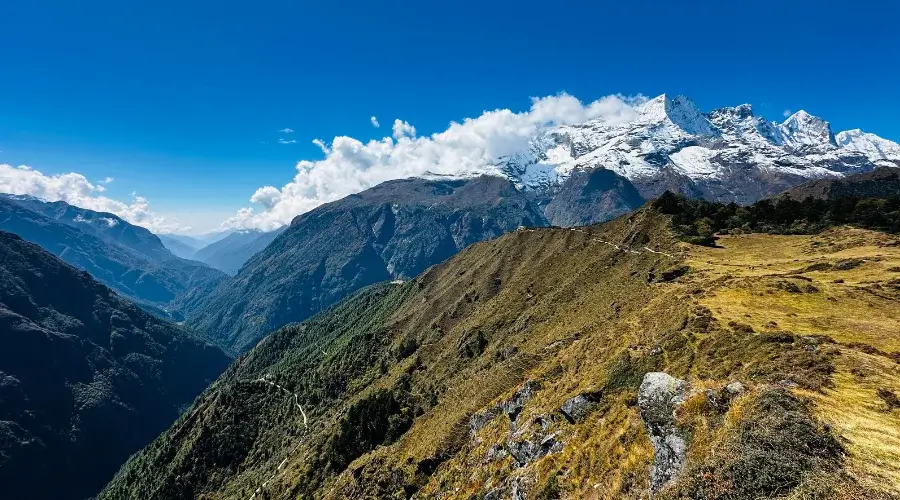
Packs of 1 to 5GB cost approximately NPR 500-800 and are sufficient for messaging and checking news. The bigger packages of 10 to 20GB would cost slightly NPR 1,500 to 2,500, based on the offer and validity. These are not daily but multi-day packages and hence convenient for trekking.
In other villages like Lukla, Phakding, and Namche Bazaar, the network has been reasonably effective. It is possible to make calls, send messages, and use data with minimum inconvenience.
Network Coverage Speed
The speed of the internet is nice in the morning, but it tends to slow down in the evening when a large number of trekkers are using it at the same time. The signal begins to be weak after Namche.
In Tengboche and Dingboche, data works occasionally and is slow and unreliable. The signal depends on the weather conditions, hence the connection may vary daily.
It is a very limited network past Dingboche. There is no data generally available in Lobuche, and even phone calls are challenging in Gorakshep. Most of the trekkers are using lodge Wi-Fi at this point or the Everest link rather than mobile data.
Thus, the mobile network should be considered a backup solution for the second half of the trek and not a fully functional solution for the whole trail.
Another alternative technique that becomes the primary method of connectivity at elevated altitudes is WiFi. The majority of tea houses and lodges in the trek have WiFi.
The speed is slower than that of there and might get sluggish in unfavorable weather. It is good for normal messaging, posting photos, or viewing updates.
WiFi in Different Villages of Everest
You will find WiFi in Namche Bazaar, Tengboche, Dingboche, Lobuche, and Gorakshep. Prices differ from one village to another.
In Namche, a few hours of WiFi can be as much as NPR 200-300 ($1.5-2.5) while in the higher villages like Dingboche or Lobuche, it becomes NPR 300-500 ($2.5-4) per hour. Some lodges also have daily, unlimited packages, which are helpful if you intend to stay in one spot for more than a day.
Everest Link & Airlink
For more reliable internet in remote areas, there are two main providers on the Everest Base Camp Trek. They both cover most of the villages along the route, even where mobile networks are poor.
Everest Link: Everest Link data is purchasable for 1-5GB (for NPR 500-800 or $4-7) to 10-20GB (NPR 1,500-2,500 or $11-$20) packages. It also functions perfectly at Gorakshep.
Airlink: Airlink also covers the major trekking villages and has similar packages. It is another dependable choice in areas with little or poor mobile network coverage.
How to Use Wi-Fi in Everest Base Camp Trek?
Everest Link or Airlink WiFi is easy to use. Purchase a package at the lodge or through the provider, make your connection, and log in. Speeds are restricted, so it’s best for messaging and social media updates (or checking a weather forecast) than for heavy streaming.
Everest Base Camp Internet and Network Coverage by Village
Internet/communication connectivity on the Everest Base Camp Trek varies from village to village, with mobile networks working quite well in lower regions and wifi or Everest Link being the primary available options at higher elevations.
As you climb, costs and network types change, so pre-planning can keep you online for the duration of your trek.
Note: If you book your Luxury Everest Base Camp Trek with Himalayan Trekking, you will not need to pay for Wi-Fi charges along the trek.
Lukla
You’re never too disconnected in Lukla. There is 3G/4G reception from both NTC and Ncell networks, which work good.
Almost all lodges have WiFi, sometimes free or for a small fee. It’s the top place to activate your SIM card and get data packages. Depending on the provider, data packs are between NPR 500-800 (4-7 USD) for 1-5 GB and NPR 1,500-2,500 (11-20 USD) for 10-20 GB.
Phakding
The cellular network is quite good; NTC is better than Ncell. The network is also largely 3G, which performs fine for calling and texting and light browsing.
A few lodges offer internet for NPR 100-200 per hour ($1-2). The mobile data is dependable, so you can stay connected for necessities.
Namche Bazaar
The most trustworthy SIM in Namche is NTC (Nepal Telecom), but Ncell also works in many parts of the town.
3G/4G mobile network can be available here. WiFi is most widely available in hotels and lodges, where you can expect to pay NPR 200-300 ($1.5-2.5) an hour for the service.
Many lodges offer WiFi packages for NPR 500-700 ($4-5) per day. It’s also the number one place to refill your SIM or purchase Everest Link data packages for higher-altitude villages.
Tengboche
Here’s where the network begins to break down. NTC is more reliable than Ncell, especially on 3G, although you may experience slow mobile data. Wi-Fi is available at most lodges. NPR 300 ($2.5) per hour is the more reliable option.
Dingboche
Mobile network is very much limited; works sometimes (NTC) and mostly not at all (Ncell). WiFi Most lodges have WiFi access, at a charge of NPR 300-400 ($2.5-3.5) per hour, and Everest Link daily rates are available. The internet is mainly via Wifi here, as mobile data tends to let us down.
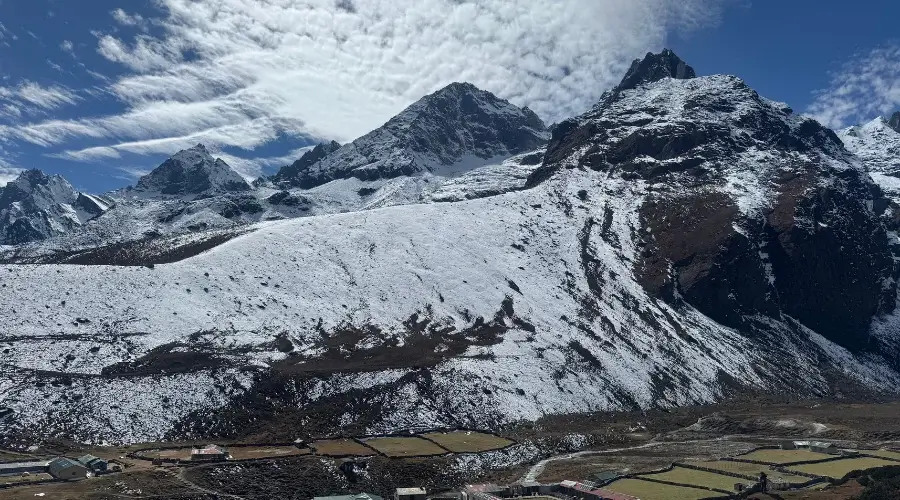
Lobuche
4G mobile network is minimal (NTC does function on & off, Ncell possibly not). Lodges provide paid WiFi. You need to pay around NPR 400-500 ($3.5-4.5) per hour.
Gorakshep
Mobile network is almost non-existent. WiFi is provided for a fee in lodges (NPR 400-500, or $3-$4) and Everest Link for anyone looking for consistent internet access. No 3G /4G signal on this elevation.
Everest Base Camp
No mobile network is available on the Everest Base Camp itself. Some lodges offer Everest Link WiFi with packages that cost about NPR 500-800 ($4-6) per day. The Internet here should never be trusted, so always verify coverage.
Tips to Use the Internet on Everest Base Camp Trek
Maintaining contact on the Everest Base Camp Trek can be difficult; however, with a few quick tips, it’s easy.
First, conserve battery and use of mobile data by only using WiFi whenever you can while in lodges (as opposed to just mobile data), closing apps that run in the background, and dimming the brightness of your screen.
You will want to bring extra power, as power is scarce in the upper villages, and charging at lodges could cost around NPR100-200 per device.
You’ll find the best time to use WiFi is typically in the morning and early afternoon when there are fewer trekkers about. Even with Everest Link, speeds slow in the evening, so if you need to make important calls or send messages, or upload, do it earlier in the day.
Trekkers should also make sure to use offline apps so as not to eat into their data.
Maps.me, Google Maps offline mode, and the trekking app make navigation easy. Messaging apps such as WhatsApp enable you to write messages offline and send them when you get a network or WiFi connection.
With a mix of mobile data in lower villages, paid WiFi access points in higher lodges, and offline apps, you can remain connected without burning through your funds or easily draining battery charge.
Send an Enquiry
Error: Contact form not found.
© 2026 - Himalayan Trekking and Tours (P) Ltd. All Rights Reserved.