

Have you ever wondered if Mount K2 could be more dangerous than Mount Everest, the highest mountain in the world? Being 8,611 meters high, Mount K2 lies on the border between Pakistan and China.
Although it is the second-highest mountain in the world, several mountaineers indicate that it is more challenging than Mount Everest. This is primarily because of its very harsh weather, mountainous routes and high mortality.
K2 does not only require power. It is a matter of timing, talent, and chance. There are relatively few safe routes on the mountain. There is no warning of weather conditions. The climb is extremely dangerous due to strong winds; massive snowfalls and freezing temperatures. Due to these factors, K2 is called Savage Mountain.
What Is the Death Rate of K2?
The death rate in K2 is still one of the highest in the world. For many decades, the statistics of Mount K2 death rates were appalling.
Approximately every fourth mountaineer who successfully arrived at the K2 summit never made it back without any accidents. The death rate of K2 was approximately quartered.
By 2025, things were a little better due to the use of improved pieces of climbing equipment, enhanced weather prediction, and coordination of teams.
Still, K2 is very dangerous. There is real loss during every climbing season, and deaths still do take place.
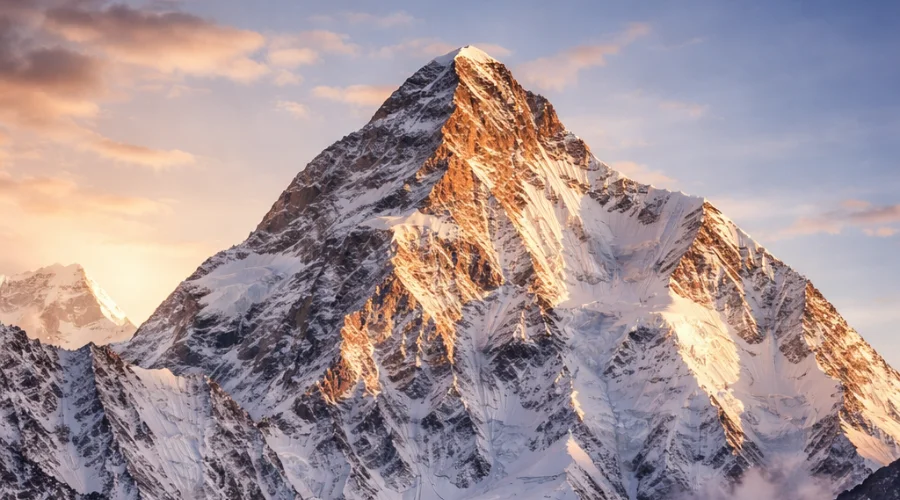
Most of the deaths on K2 occur in descent. The climbers tend to be tired of the summit push; there is not much oxygen and such factors as the weather may turn out of the blue and such technical divides as the Bottleneck is even more dangerous on the down-step.
Even in the era of modernity, K2 does not provide any safety measures. It remains a challenge for even the most expert climbers in world climbing.
Why Is the K2 Death Rate So High?
K2 is not as safe as there is minimal room to miss. Between the base camps and the peak, the mountain is steep and technical with no rest areas given much importance.
K2 weather is challenging and unpredictable. Powerful winds may warm up at any moment even at the most optimal period of climbing.
Snowfalls may cover passages in a few hours, and the night temperature can become extremely low. The risk of frostbite and hypothermia is especially high. Most of the climbers are stuck on the mountain without an escape route.
The largest threat is the Bottleneck of Mount K2, which is less than 8,200 meters below huge, suspended ice-cliffs. Snowfall might occur without any sign, and climbers must walk through steep ice slopes and await in a long queue often when their oxygen level is low and extremely fatigued.
The other significant problem is descent risk. Many climbers are unable to go further after reaching the summit. The body is weak; the mind becomes slow, and the coordination declines. It is at this point that accidents occur.
Numerous fatalities are on K2 as they come down more than upwards. There are very few options for rescue. The impossibility of being helped is due to bad weather, high altitude, and remote location. Climbers know they must save themselves a lot of time.
Due to these two damaging threats, K2 continues to be one of the most dangerous mountains in the globe.
K2 Death rate vs Everest Death Rate
Everest and K2 are compared, and they have much in common. Everest is taller, whereas K2 is significantly more difficult to climb, and this is why its lethality has never been lower.
There are numerous pre-established routes in Everest. It is usually equipped with fixed ropes, ladders, and large support teams, and offers a greater variety of rescue options.
Helicopters can access lower camps, and rescue is normally fast. Due to this, the general mortality rate in Everest is low, despite the increased number of people climbing it annually.
K2 offers no such comfort. The mountain is technically in shape and is steeper in all places. Tracks are not very wide and in the open, and mountaineers are always in danger of falling ice, rocks, and sudden storms. Everest crowding is less, but that does not make it safe.
It is estimated that the death rate per 1-2% in the past years in Everest. Even today the death rate is significantly higher on K2.
The death rate of K2 is nearly 25%; now it is much less, still, it remains a few times higher than that of Everest.
The other major distinction is descent risk. In Everest, there tend to be marked trails and the oxygen used by climbers. On K2, the process of descent is lengthy, steep, and tiring. Several climbers on the mountain arrive at the summit but are not strong enough to go back safely.
This is the reason why K2 is more dangerous than Everest, although it is lower than Everest.
K2 Death Rate by Numbers
K2 is not only high, but it is lethal. The figures illustrate the reason why it is referred to by climbers as the Savage Mountain.
The earliest records of successful climbers to the top of K2 are in the 1930s and about 964 people who made it.
Unfortunately, 92 climbers lost their lives in Mount K2. This is between 9.5%, and the sum-total death rate is about 9.5 percent per summit- nearly 1 per out of 10 summits is fatally tragic.
K2 had been deadlier still formerly. Until 2000, the fatality rate stood at nearly 29% or nearly 3 out of 10 climbers who had made the summit were never rescued safely.
The extremely harsh weather of Mount K2, technical routes, and the few rescue options made it almost unforgiving.
The risk has decreased over the last few years due to the modern climbing gear, improved weather predictions, and increased support teams.
The fatality rate of K2 has decreased to approximately 9.5% since 2000, depicting that preparation and experience reduce but not eradicate danger.
Most of the deaths occur during the downward movement as climbers become exhausted, oxygen supply diminishes and the storms hit unexpectedly.
K2 is much deadlier than Everest, which currently has a fatality rate of about 1-2 percent. Such numbers allow such an explanation why even professional climbers treat K2 with even greater care.
K2 Death Rate on Different Routes
The K2 is unsafe in all routes, although there are pathways that are more hazardous than others. The most notorious one is the Abruzzi Spur which is the path most climbers exploit. The mountain here also is a trial of all skills.
The number one top reason is the Bottleneck, which is the deadliest. It is a tight space that is approximately 8,200 meters below huge hanging ice cliffs. Avalanches or falling ice may occur anytime.
Numerous climbers have lost their lives here, and thus, none of the climbers come here without careful consideration.
The North Face is more technical and expensive. It experiences fewer climbers, and the danger is great. Such a road is among the toughest due to avalanches and severe winds. There is barely a chance of rescue, and the slightest slip can kill.
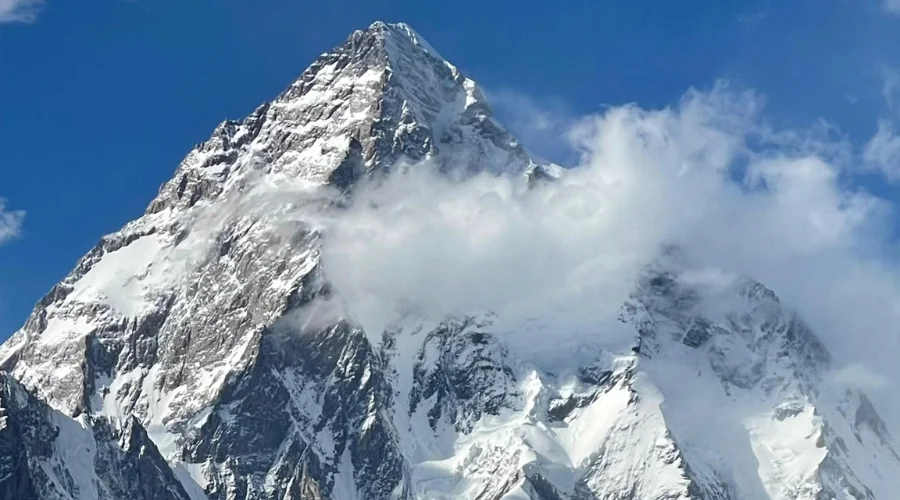
The East Face and East Side routes are not frequently used, but equally hazardous. Climbers must endure unpredictable weather, hidden crevasses, and unreliable snow.
Lack of information and relatively fewer attempts undertaken in the past make such routes more dangerous compared to more commonly used routes.
All the K2 routes include technical, exposure to falling ice or rock, and unpredictable weather. That is why route choice, preparation, and timing are essential.
K2 Death Rate During Summit Push
The most dangerous stage of the expedition is the summit walk on K2. When they are 8,000 meters, the body is so overheated that there is little oxygen, and mental concentration begins to decline.
Most deaths occur during the summit climb instead of at the earlier stages of the climb. Experienced climbers, too, are in danger of extreme risks here.
The Deadliest part of Mount K2 is the Bottleneck which is approximately 8,200 meters. Climbers must pass through ice slopes of narrow dimensions with hanging seracs above them. A slip or a falling shower of ice is fatal.
More than 60% of the deaths due to K2 above 8,000 meters, in or just after the summit push. A lot of the climbers make it to the top and cannot find safe ways down.
Even the slightest errors may be fatal at this point. Malfunction of equipment, improper position of the foot, or lateness can change a successful climb into a tragedy.
That is why the saying of the climbers goes: the only half of the battle is to get to the top; it is the other part to get down safely.
The summit push of K2 makes it clear to all that this is a mountain that is in no way forgiving. The last kilometers are the deadliest, regardless of the preparation, experience, and weather reports.
Is winter climbing possible on Mount K2?
The mountain is much more dangerous than in summer or early autumn. The temperatures may times drop to levels below -50 0 c, winds tend to reach more than 100km/h, and a snowstorm may hit unnoticed. Such extreme situations render climbing hard.
In winter, the mortality is very low compared to other periods. In the past few climbers have made it to the summit of K2 during winter.
UA ascent in January 2021, with modern equipment, only a few have been able to safely complete it. Frostbite, hypothermia, and exhaustion are many problems encountered by many teams.
There is also an increased risk of descent during winter. Visibility is low and it is also very cold; this makes it hard to navigate. Crevasses can be covered by snow, and mountains covered in ice are unpredictable.
The rescue is nearly impossible because helicopters cannot operate in the case of heavy snow or strong wind.
Due to these, K2 winter ascents are an infrequent yet fatal occurrence. It is only undertaken by exceptionally competent and well-equipped teams who even take it very cautiously.
Women Climbers on Mount K2
It is not an easy task to climb K2, but female climbers have more obstacles to overcome. Despite all the dangers, a considerable number of women have managed to reach K2.
The mortality rate of women, although the number of them is lower, underscores the extreme nature of the mountain.
Such aspects as outside weather conditions, rough landscapes, and high altitude do not discriminate against anyone.
However, research and the experience of climbing prove that in many cases, women must pay special attention to the management of endurance and the process of acclimatization.
By 2025, approximately 40 women have made K2 summits, and 2-3 women have lost their lives on the mountain. Such figures are insignificant, considering men are concerned, yet they emphasize the point that K2 is fatal to everyone who aspires to climb it without appropriate training.
K2 Death Rate vs Success Rate
K2 is not just deadly. It is, moreover, extremely difficult to top. Even experienced climbers do not always manage to get to the top. That is the reason why it only has a very low success rate when compared with Everest.
There was only a historic 29% success rate of climbers who climbed to the peak of K2 in the 20th century. The success rate has also increased with improved gear and planning to approximately 5-7%. This is, however, equal to nearly 50% failure rate of climbers in favorable conditions.
The low success rate is associated with the death rate of K2. The mountain is sharp, technical, and exposed. The alteration of the weather is rapid and fatigue in mountaineering of the summit amplifies the danger. Many climbers are forced to retreat only a few feet off the summit to be safe.
Coming down is the most difficult part even for those who arrive at the summit. Most deaths happen on the descent, making the death rate of K2 high even with current advancements.
K2 is a test of survival and proficiency. The extreme climbs and the conditions that comprise it make it one of the most rigorous climbs in the world. It is not only about getting on top but being able to get back also.
K2 Trekking vs Climbing
It is a common phenomenon to see many travelers arriving at K2 without climbing it. The journey to K2 Base Camp is very different compared to trying to summit. The trail is very challenging however it is much safer compared to the climb.
K2 Base Camp is located approximately 5,150 m, where climbers are faced with cold temperatures, high altitude, and rough tracks. Accidents can hit us, though the cases of death are extremely rare in comparison with the summing.
The trek provides gorgeous views of K2 and other surrounding peaks without having to face technical risks as well as those encountered higher up.
K2 Summiting is indeed a different challenge altogether. It is also one of the deadliest mountains in the world, due to its death rate, technical requirements, and unpredictable weather. Most of the deaths occur above 7,500m, which is far beyond the boundaries of trekkers.
Major Disasters on K2
1986 Tragedy
In 1986, a fierce storm hit climbers almost at the top. Some teams got trapped on uphill mountains, having to fight strong winds and freezing temperatures. Some experienced mountaineers lost their lives in the process of descent.
A total of 13 climbers died during the 1986 K2 Disaster.
1995 Bottleneck Avalanche
The deadliest part in K2 is still the Bottleneck. A massive avalanche took place along the narrow pass in 1995 because of an icefall. Passing climbers were taken by surprise, causing six of them to die. The tragedy revealed that amplified dangers are associated with ascending to an elevation beyond 8,000m.
2008 K2 Disaster
The year 2008 was among the deadliest seasons in the history of K2, and there were 11 deceased climbers that were lost in a run of one season. The deaths were brought by avalanches, rockfalls, and sudden storms. Several of the climbers had arrived at the top only to die on their way down. That season is still a dark period of K2 mountaineering.
Other Notable Incidents
There have been smaller-scale disasters over the years, and most frequently these have been brought about by abrupt changes in weather, drawing of ice or rocks and altitude sickness.
Other mountaineers are lost without rescue assistance, and they ruin families and crews. Every incident pushes us in bold faced reality that K2 is obliged to be respected, prepared, and cautious.
Attacks of disasters are still possible despite modern equipment and weather prediction devices. K2 is still one of the most dangerous mountains on the planet, in which any slip or hurricane can start the tragedy within minutes.
Total Number of Dead Bodies on Mount K2
K2 has taken several lives since the early 1930s. It is estimated that there had been around 90-100 climbers who died in the process of summiting the mountain by 2025.
Such deaths are attributed to avalanches, falls, altitude sickness, frostbite, and harsh weather. Even though this is still less than Everest, many fewer people do K2 every year.
In K2, there are very few bodies that are visible, as is the case in Everest. The avalanches and the steep landscape are known to take away the lives of climbers, throwing them down the deep crevasses or even washing them away.
The danger to the rescuers, combined with the nature of the landscape and the weather normally makes recovery impossible. Many dead bodies are never found.
The death tolls occur mostly above 7,500 meters but mostly in the Bottleneck and descending the summit. There is a severe lack of oxygen, and mountaineers are tired. Small errors can prove fatal.
Send an Enquiry
Error: Contact form not found.
© 2026 - Himalayan Trekking and Tours (P) Ltd. All Rights Reserved.